
Recently Michael Tunnell interviewed Aleix and I on the subject of KDE’s 30th birthday, Wayland, LTS software, the new Union theming engine, and more! If you’re interested, you can check it out here. Note: if you work at Microsoft, please don’t watch and get any big ideas! 😆
Author: Nate
KDE and AI, and you, and me
So I accidentally triggered an online shitstorm in the process of trying to craft a set of more restrictive LLM usage guidelines for KDE. Sorry about that. 
I’m going to leave the comments on this post open, but I will request that everyone who wants to comment read and understand the entire post first.
So anyway…
What happened?
Here’s a verifiable timeline of events:
- Several weeks ago, a KDE developer started a mailing list thread asking about how we should handle the flood of AI slop merge requests.
- Everyone agreed it was a problem, and that we don’t want that crap.
- There was less certainty about the best way to handle it socially.
- Several wished for an official policy so we didn’t all have to figure it out on our own.
- I proposed a set of draft guidelines making it quite clear that slop merge requests are unwanted, and can be ignored or closed.
- It received a generally positive reception.
- Another KDE developer requested that we workshop it somewhere more modern and capable.
- I got busy and didn’t do so.
- Several weeks later, various people on the internet discovered that a talk proposing “a lovable, sovereign, AI-native KDE” had been accepted at Akademy 2026 and created drama around it.
- Akademy happened, and the talk was given to what I’m told was a fairly chilly reception.
- The next day, a workshop was held about the topic, also receiving a chilly reception.
- Realizing this topic was not going away, later that day I re-opened a second draft of my LLM guidelines on invent.kde.org.
- KDE contributors began to discuss the draft proposal.
- Two people unknown to any KDE contributors appeared and began fighting with one another about the broader topic of the morality of AI, not the proposed guidelines.
- One of those people
doxxed the other(edit: I have been informed that this is not really what doxxing is) exposed the other person’s odious Twitter posts in an effort to discredit them. - Comments on the draft proposal were locked to only KDE developers — one of two tools that that Gitlab provides for this kind of thing, the other being to hide it entirely.
- The person who
doxxedexposed the other was banned. - Later, the identity of the
doxxedexposed person was verified, and they were also banned for their conduct outside of KDE being so unacceptable that people inside KDE did not want to associate with them. - Someone else outside of KDE set up https://kdeforpeople.com in an attempt to
brigade(edit: I have been convinced that this was too strong a word to use here) pressure KDE into banning LLMs. - A bunch of people signed onto it, almost none of whom are known KDE contributors (I see one person I know in there).
- The topic was picked up on social media and the press with… varying levels of accuracy.
- The draft proposal was removed and the whole topic hidden.
TL;DR:
A bunch of people mostly outside of KDE who disapprove of LLM usage derailed KDE’s attempt to add restrictions to LLM usage.
Yep, that’s where we’re at in the state of online discourse around AI.
I’m sorry
After everything I wrote last month about keeping your community safe and containing damage so it doesn’t spill out into public view, I feel pretty bad that my attempt to craft a compromise policy around LLM usage in KDE (which would have tightened it!) backfired and created a storm of drama.
It wasn’t my intention, and I apologize for my role in it. If I make another attempt to craft a policy that provides certainty and cover for maintainers who want to reject AI slop, I will be even more careful to avoid creating unnecessary drama. If someone else wants to, I will try my best to help them with the same.
More facts
People jumped to some pretty wild conclusions in the various social media threads about the topic that I saw. Before we continue, let me set some more records straight:
- KDE e.V. has not taken money from DHH or Omarchy. I also have not, either personally, or in my business.
- KDE e.V. has taken money from Framework, but only after verifying that Framework had severed their (already very limited) ties with DHH and Omarchy. Also, all of this happened a year ago, before Omarchy received a ludicrous amount of money from a veritable rogues gallery of villains.
- Today, Omarchy is radioactive in KDE and adjacent communities I’m aware of. Nobody I know wants to have anything to do with them.
- The “lovable, sovereign, AI-native KDE” idea was presented by two people important to KDE in decades past, but who had not made any contributions recently besides this Akademy talk. Their idea does not reflect the overall direction of KDE or Plasma, and I don’t think it ever will. If “a lovable, sovereign, AI-native KDE” freaks you out, I believe it is completely reasonable and safe to ignore.
What on earth is going on here?
I know people are really riled up about AI. I get it. The negative effects of LLM usage seem to become more obvious by the day:
- They lower the barrier to entry for people who have no idea what they’re doing to DDoS FOSS maintainers with a tidal wave of crap. And this was the actual reason for the proposed restrictions.
- They make it easy for lazy people to avoid learning communication and job skills.
- They make it easy for lonely people to form unhealthy para-social relationships.
- The companies behind the big ones are really bad.
- Some of their training data was stolen.
- Some of their training data that was not stolen results in the destruction of rare books.
- The process of training them on freely available online data imposes extra hosting costs and slows down access for humans, acting as economic free riders.
- The license of source code they produce is legally unclear.
- They have been discovered autonomously hacking rival companies.
- Their resource usage frequently strains the infrastructure of the communities their data centers are located in or near.
- Their data centers are using enough electricity to blunt and reverse prior positive global trends of lower electricity demand and greener electricity generation.
- The specialized hardware they use has monopolized global production lines, massively inflating the price of normal consumer and business computer hardware.
- The enormous amount of capital allocated to them may be impossible to recoup, with the potential to eventually cause a worldwide economic crash.
- They are either mandated or voluntarily used by so many people already, that many who do not use them fear they will “fall behind” or “become obsolete” despite concerns with any of the above.
So yeah, bad stuff. I completely understand why a lot of people have problems with LLMs. I have these concerns as well.
I also understand why a lot of experts in their field really like LLMs. These are very powerful and sophisticated tools. Capable people with decades of experience can successfully automate away a lot of tedious work, and still end up with a final product identical to what they would have done by hand.
I don’t use LLMs for automating work myself, but I do understand the appeal to many experts.
And I also understand that LLMs can be responsibly used in really useful ways for general tasks like learning a nebulous skill, retrieving deeply-buried information you can only describe in unspecific ways, or helping you troubleshoot a problem with unclear steps or parameters.
At the same time, I think we have to acknowledge that irresponsible LLM usage by people who are not yet experts is a disaster for their learning, expertise, social skills, and emotional health.
In other words, this is a hard problem.
What on earth do we do?
How are we expected to handle a technology that is:
- Very powerful
- Genuinely useful for various things
- Dangerous, de-skilling, and/or addictive in the wrong hands
- Full of really bad externalities
- Broadly available worldwide at effectively zero cost
It’s like 100 billion toaster-sized nuclear reactors dropped from the sky one day. The very least you can say is that this would be very de-stabilizing!
The world is changing fast and I have no idea what’s going to happen. But I don’t think the genie is going to be put back in the bottle. I don’t know what to do, and that’s scary. And I have a lot of empathy for anyone else who’s scared by this, too. We’re in this boat together.
What can you do to help?
If I or someone else tries again to propose a set of usage guidelines that restrict inexpert usage of LLMs, with the goal that KDE receives fewer of the AI slop merge requests that are burning people out, please don’t make things worse.
Please don’t derail the process.
Please don’t take it as an opportunity to fight over the broader topic of AI in general.
Please don’t try to burn each other to the ground over it.
Please don’t actually doxx or send hate mail to anyone over it, or try to get them fired from their job.
Please, just be kind. We’re all trying our best over here. No one in FOSS is a cackling techbro… outside of maybe Omarchy. 😬 The rest of us are trying to figure out what to do about the nuclear reactor that fell into our living room without killing ourselves, hurting anyone else, or becoming unemployable.
If at this point you want to post a comment, please be kind and treat the topic with an adult level of maturity. I believe in you. 🙂
How I write documentation
I’ve been writing a lot of documentation recently — including almost all of KDE Linux’s docs, as well as the KDE human interface guidelines.
And I’m at Akademy 2026 right now where the cat is out of the bag — one of KDE’s three latest goals is about documentation! Thiago, Joseph, and I will be tackling this:
Ahh documentation… everyone’s favorite topic. We all just love reading it — and even more, writing it, right?!
Yeah, I didn’t think so. Like a vacuum cleaner or a dental X-ray, documentation may be sometimes necessary, but you want to interact with it as little and as quickly as possible, then forget about it.
So this goal is not really about writing more documentation, but rather better documentation.
To that effect, I’d like to share some guidelines I try to follow and that I’d like to guide our work when writing software documentation:
1. Don’t
The best documentation is no documentation.
There’s a famous XKCD comic about it:
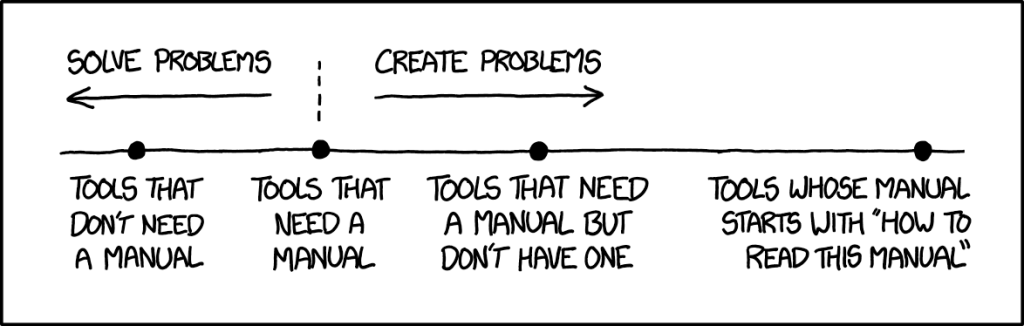
The software’s usage should be blindingly obvious, or at least generally self-explanatory. Aim for this platonic ideal in the software itself.
You’ll fail, of course. But the effort will improve your software and let you get away with writing much less. Anything you have to document how to do is clearly something that could be more obvious or more automated!
2. Make it easy to find
Documentation in the software itself is better than on some website. Make heavy use of descriptive labels, subtitles, and help buttons. Put explanatory comments in config files.
For web documentation, link to it everywhere. Don’t assume the user will find it easily!
3. Keep it actionable
People only read documentation after exhausting all other options. By the time they arrive, they’re tired and cranky.
Front-load the answer they’re looking for, and get to the point fast. Quick tutorials are better than manuals, lectures, or history lessons. Don’t just explain what every button does — this should be obvious (see #1).
Add copious amounts of copy-paste-able sample code, especially in API documentation.
4. Keep it short
Endeavor to minimize the unnecessary wordiness of the text that the reader will be reading, in order to maximize the likelihood that they will succeed in locating an example of the specific information that they were seeking.
See how horrible this is? Your readers will want to beat you in the neck with a cactus.
Keep sentences short. Use “the”, “a/an”, and “that” as little as possible. Don’t repeat yourself.
Use lots of line breaks to avoid exhausting walls of text.
Don’t over-document; obvious things don’t need to be explained. You only need to cover topics that readers keep having trouble with — and that reveals flaws in the software; see #1.
5. Phrase it readably
Use the imperative mood and the active voice. Tell the reader what to do! It’s why they’re reading. Write naturally, and don’t be too formal.
Use bold text to help readers skim by highlighting the most important parts of longer paragraphs or bulleted list items — especially their opening sentence or clause.
6. Organize it simply
Use a linear flow, not a branching flow. Nobody can get lost going linearly from start to finish. Aim for one level of organization with no nested sub-pages.
Organize each page’s text into sections with descriptive headings so the reader can skim to the exact part they’re looking for.
When multiple options for how to do something are available, choose one to be the official recommendation. Only mention alternatives later, in a de-emphasized manner.
Provide a table of contents; Ctrl+F on that page should be useful.
This is a surface-level treatment, of course. Even if the final product should be small and focused, the way to get there is a vast topic. So consider it a sneak peak of one of the thrusts of the goal, and thank you to everyone who voted for it!
Photos: a proposed replacement for Gwenview
Gwenview has been KDE’s flagship image viewer for over 25 years. It works, it’s feature-packed, and it’s been modernized repeatedly. Gwenview has served generations of KDE users faithfully and well.
So… why build a replacement?
Well, over the years Gwenview has fallen behind in some areas that can’t easily be retrofitted without rewriting half of it anyway — like better performance with large image libraries, GPU acceleration, mobile-friendliness, and the kind of enjoyably hackable QtQuick UI that would make it easier to modernize and engage a new generation of contributors.
Either by way of illustration or as a result of the above, community contributions of features, bug fixes, and UI improvements to Gwenview have dried up in recent years. It would appear that Gwenview’s technical architecture has reached the limit of what people are willing to do with it.
Something new
Meet Photos (originally named “Koko”):
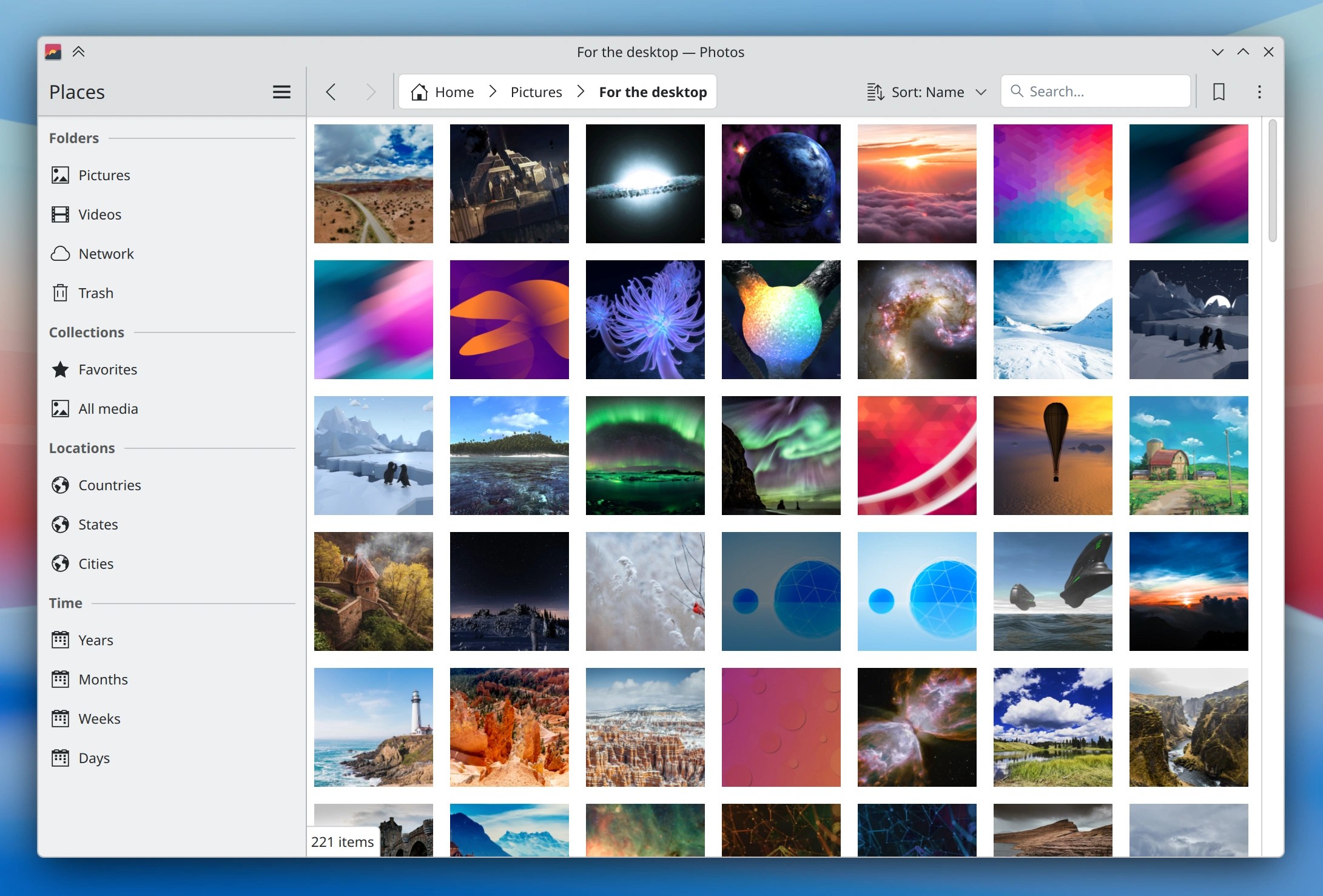
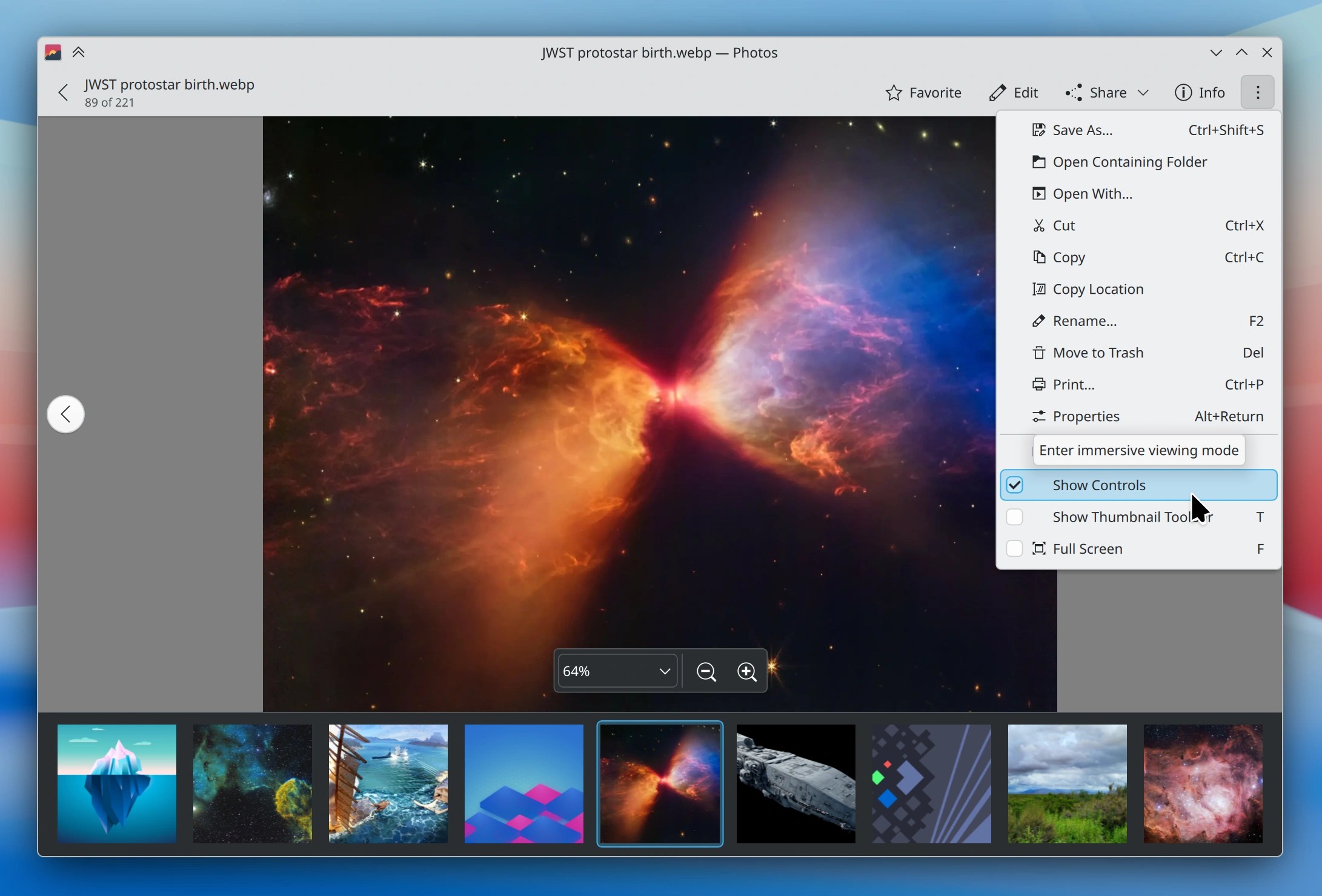
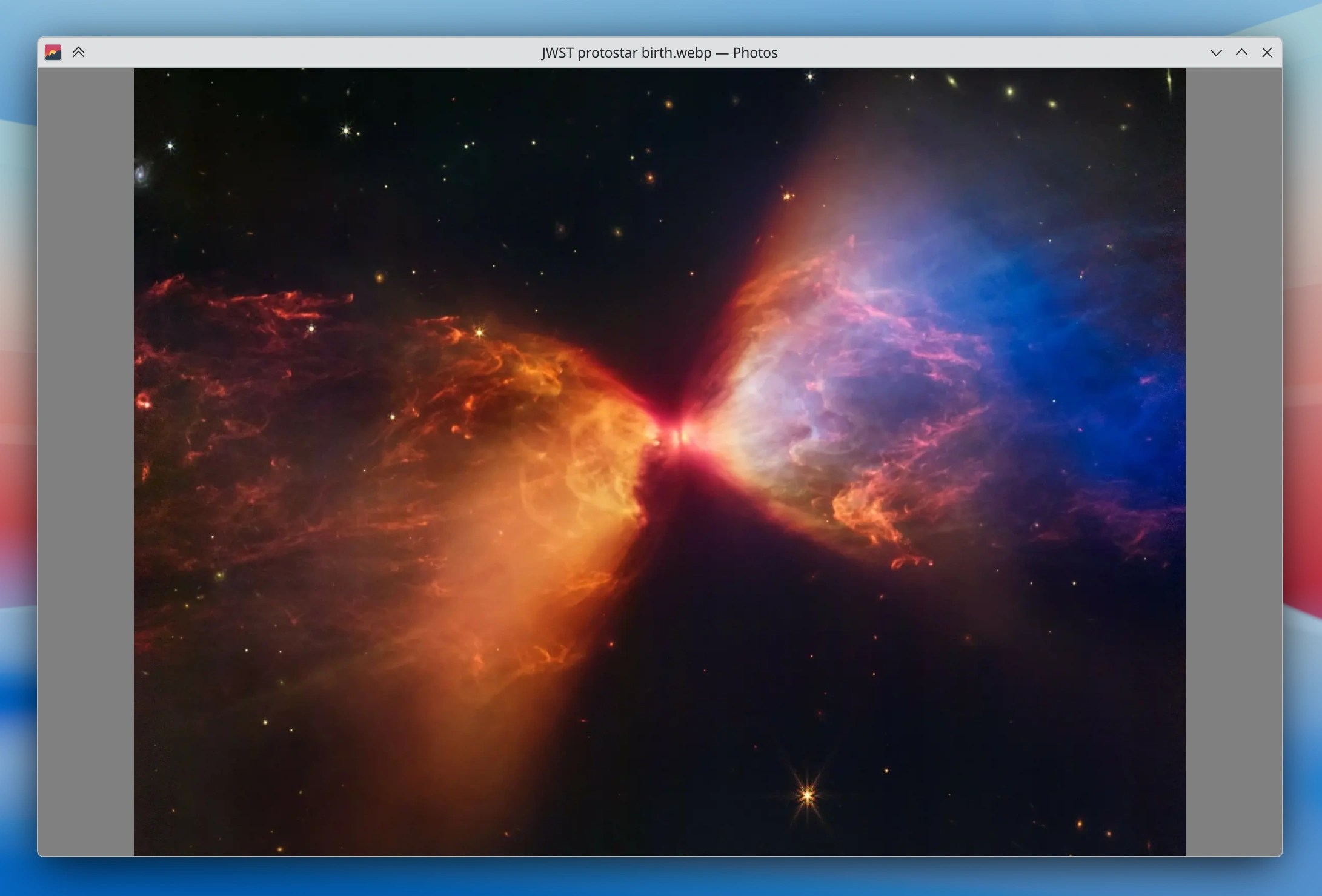
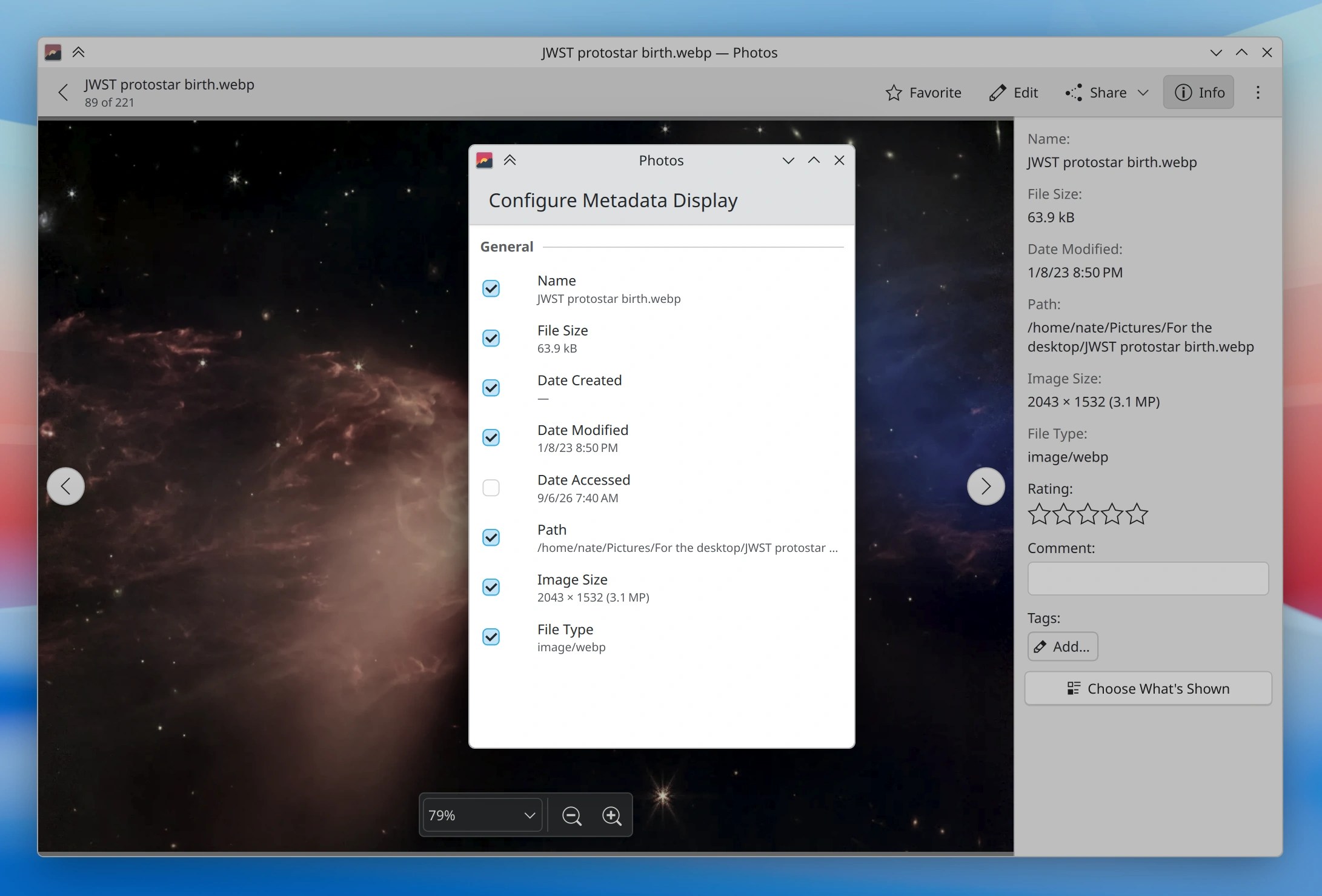
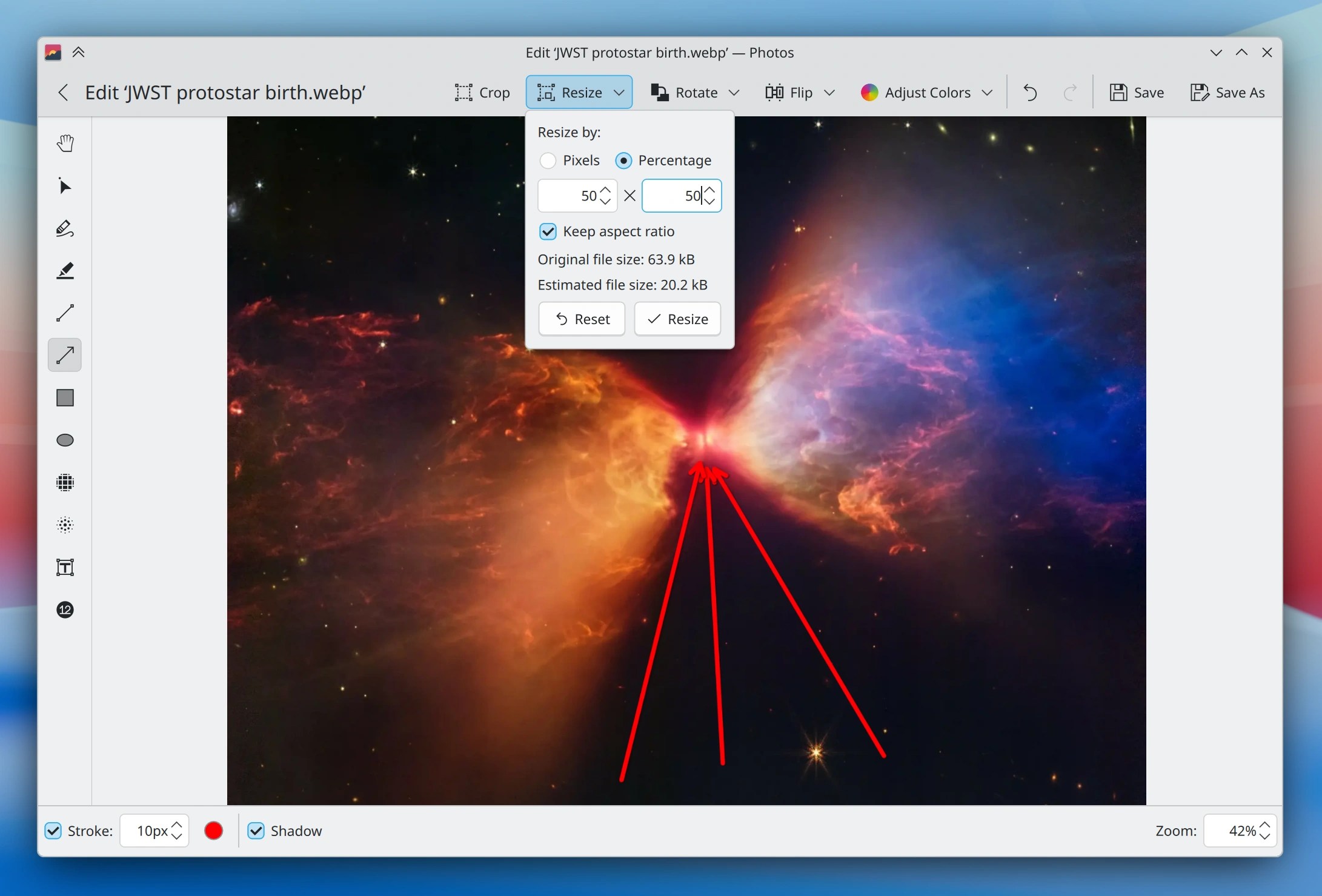
Actually I lied: Photos is not a new app. Its first release was five years ago, after extended development dating at least back to 2017. But it was always somewhat niche, because it began as a mobile app and couldn’t match Gwenview in raw functionality and desktop-friendliness.
So over the past year, Techpaladin Software (full disclosure: I’m the CEO) has sponsored a bunch of development with the explicit goal of bringing Photos to parity with Gwenview as a first-class desktop app. Oliver’s recent blog post contains lots of interesting details about the process.
Techpaladin folks will continue to contribute maintenance for a while, but our hope is that we’ve managed to bootstrap the app to the point where the KDE community can generally take over for further feature and UI development on the desktop side. Therefore…
Give it a try!
I’d like to invite users to try using Photos, and invite distros to consider replacing Gwenview with it — either soon, or in the future.
I’m sure it won’t be perfect. Gwenview has had an extra 15 or so years in the metaphorical oven. But at this point Photos has pretty much all of the relevant features, plus some added goodies:
- Much better performance, especially with large photo libraries and high DPI screens
- Mobile-friendly UI that’s also capable of being used as a very small window
- Shares Spectacle’s amazing annotation system
- You can mark images as favorites
- Timeline, location, and “just show me all my images” views
So give it a try! The current 26.08 release is pretty good, and the upcoming 26.12 release will add a few more improvements.
If you find any bugs, sources of UI awkwardness, or missing features compared to Gwenview that you actually need and care about, feel free to report them on the Bugzilla page. And changes can be contributed via merge request on Photos’ invent.kde.org page.
Let us know what you think! And if you like it, consider helping out with development or bug triaging. It takes a village to raise a child maintain an app. 🙂
Bug triaging help needed
For many years now, I and others have been working on getting plasmashell’s open bug reports as accurate and actionable as possible.
We’ve made tremendous progress, driving down the number of unconfirmed bug reports to its lowest levels in over a decade, and mostly keeping it there:
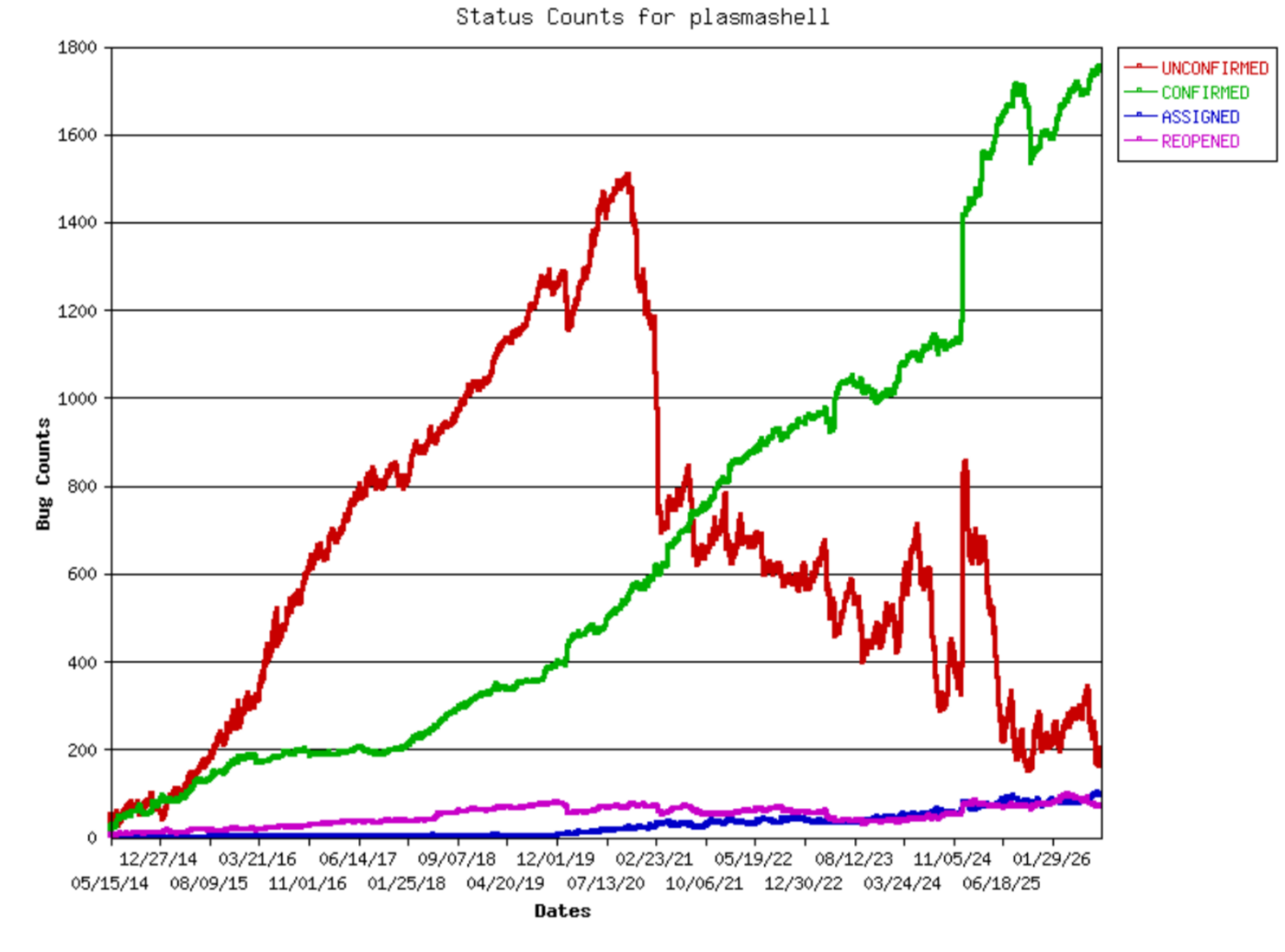
Right now we’re at a point where we’re down to about 160 unconfirmed reports, and we need your help to get that down as close to 0 as possible.
Why do we need your help?
Because most of the remaining unconfirmed bugs are really hard to reproduce and confirm. They can only be understood or reproduced by someone with specialized hardware, uncommon software, specialized configurations, specific VPN setups, domain-specific knowledge, and so on. Others were reported in a state where the author doesn’t know how to reproduce the issue and none of us has been able to, either.
The addition of your valuable eyeballs and brains can help figure out what the heck is going on in these reports!
How to help
- Figure out the pattern for issues that are reported to happen “randomly” or “sometimes”.
- If you have the hardware, configuration, or specialized software necessary to try to reproduce an issue described as specific to it, try.
- If you’re familiar with upstream software like the Qt, PipeWire, Bluez, graphics drivers or the Linux kernel, help identify bug reports whose issue is upstream of KDE.
What it takes
- Use the latest released version of Plasma. that’s 6.7.4 as of the time of writing. A distro that uses git master versions of things is even better.
- Use a distro that ships KDE software as “vanilla” as possible, with a minimum of distro-specific customizations. Either as your daily driver, or in a VM. Arch Linux and KDE Linux are good options here, and Fedora KDE is okay too. Highly opinionated distros can still work, but are not as ideal for bug triage.
- Read through and understand https://community.kde.org/Guidelines_and_HOWTOs/Bug_triaging.
- Be nice. You’ll be a part of KDE’s public face!
And that’s it! Bug triaging help is really appreciated here.
I would absolutely love it if we could get the number of UNCONFIRMED plasmashell bugs down to 0, and then keep them that way by pouncing on every single new one as it comes in.
You can help make that possible! Thanks, everyone.
What a real LTS looks like: Kubuntu 26.04
Last year, Plasma developers canceled the long-term support (LTS) version of Plasma. Why?
We had a few reasons:
- Almost nobody was using it; really only Kubuntu. Other discrete-release operating systems like Debian and openSUSE Leap generally ignored it.
- It wasn’t a real LTS; we only backported some fixes for Plasma, and nothing for the Frameworks it was built upon, nor the Gear-aligned KDE apps it shipped with.
- Our backporting of fixes was fairly blind since there weren’t CI resources to validate them, and nobody ever felt like testing them manually.
As a consolation prize for canceling the Plasma LTS product, we decided at the time to add an additional bug-fix release to the normal Plasma schedule, effectively lengthening the support period for each non-LTS Plasma version by 2 months — from 4 months to 6.
And as a result, there have been no Plasma 6 LTS versions.
…Until now!
Plasma 6.6 is now an LTS version. And not just Plasma 6.6 itself, but also a specific version of KDE Frameworks: 6.24, which will also receive backported bug-fixes. And Gear 25.12, too!
What changed?
It wasn’t a change to my or anyone else in KDE’s opinion of what a proper LTS product looks like. Rather, it was the Kubuntu Focus company stepping up to fund the creation of one, as announced today!
That’s right, Kubuntu focus is sponsoring a Plasma 6.6 LTS product for the next three years!

This consists of a couple of pieces:
First of all, Kubuntu Focus is sponsoring Techpaladin Software to fix bugs identified by Kubuntu 26.04 users. (full disclosure: I’m the CEO of Techpaladin Software). We’re not just backporting bug-fixes that happen to get made, but rather actively working with the Kubuntu folks to identify and fix pain points experienced by them and their users.
Plasma 6.6 will thus remain eligible for bug reports for the next three years, and we’ll do our best to get them fixed and backported.
Speaking of which, we’ll be backporting fixes for more than just Plasma 6.6 — relevant ones will also to Frameworks 6.24 and Gear 25.12, the versions that Kubuntu 26.04 ships with. The whole KDE part of the software stack!
Finally, Kubuntu Focus is sponsoring additional continuous integration resources owned by KDE e.V. to handle the load of validating changes made to these older versions. And they’ve been generous enough to sponsor more than was strictly speaking needed for the initiative, so KDE in general benefits from faster CI times even for non-LTS work!
We’re calling the whole thing the “Bullet-Proof KDE Initiative”.
This is what a real LTS initiative looks like, folks: people involved with an OS putting the resources into making a non-LTS upstream release into an LTS one, properly. With bug fixes — not just security fixes — backported to all levels of the software stack, not just the top one.
So I predict Kubuntu 26.04 promises to offer the best KDE experience of any Kubuntu release ever!
I know a lot of folks really enjoyed Kubuntu’s 24.04 release because of how it lined up with Plasma 5.27, which we made an LTS release for an extended period of time during the Plasma 6 transition. Well, this is the same thing, only with a great version of Plasma 6 included, and supported for even longer!
Aha, so you’re a sell-out who changed his opinions about LTS due to money!
My opinion remains the same: I don’t dislike LTS products — only fake ones that promise support but don’t actually deliver it. With this initiative, users of Kubuntu 26.04 get a real LTS product, with real support backed by a pair of commercial companies.
So this is all a commercial thing? KDE gone korporate?
It’s largely a commercial initiative between Kubuntu Focus and Techpaladin Software, yes — though KDE e.V. has signed off on the initiative and agreed to accept funding for the new CI resources.
Both companies are good citizens in the KDE ecosystem: KDE e.V. patrons, employers of engineers you’ve heard of, and providers of hardware and services to users of KDE software.
And the benefits accrue far beyond just the companies. Obviously Kubuntu 26.04 users benefit, even those who didn’t buy a computer from Kubuntu Focus. And as I mentioned earlier, all of KDE now has more general-purpose CI resources. Also, many of the LTS bugs that Techpaladin people have already fixed were affecting people on later Plasma versions, too! Everyone wins here.
So the commercial part is not a limitation on what anyone else gets for free or is allowed to do; it’s just an acknowledgement that creating a real LTS product costs money.
Wow, really cool! How can I help?
Anyone in the wider KDE community who’s interested in this kind of thing should feel comfortable backporting important and safe bug-fixes to the stable branches for Plasma 6.6, Frameworks 6.24, and Gear 25.12. There will be a Kubuntu CI runner that makes sure nothing breaks (at least, nothing that’s tested in the CI! So keep that test coverage high).
And if you happen to run discrete-release OS and would like to get in on the action, feel free to ship Plasma 6.6 and invest some of your own resources into it! It will be very welcome to see more people fixing bugs reported by LTS users that are still present on master, or backporting more recent bug-fixes to the LTS version. Again, everybody wins here!
Keep your community afloat with the right defense tokens
My favorite tabletop game of all time is Star Wars: Armada, a Star Wars themed ship combat wargame.

Armada has many deep and tactically interesting features, but one of my favorites is the unique suite of defense tokens available to each spaceship to protect itself against attacks, from among the following six options:
- Scatter – the attack is completely canceled. “I wasn’t where you were shooting”
- Evade – cancel an attack die at long range, or re-roll one at short and medium range. “I dodged your attack, so it missed or became a glancing blow”
- Brace – halve the damage. “Ouch, you hit me! But it wasn’t as bad as it could have been”
- Redirect – move some damage to an adjacent hull zone. “You hit me, but not where I was weakest”
- Contain – downgrade a critical hit to normal damage – “My damage control efforts turned the potential catastrophe into just a normal crisis”
- Salvo – return fire. “You hit me, but I hit back”
There’s way more information here for people whose military nerd curiosity has been piqued.
Anyway, this is well and good for games about spaceships, but what’s the relevance? Let’s imagine that we humans have these defense tokens, too. And today I’d like to talk about how they relate not to physical attacks, but interpersonal ones.
You negligent fool! You nit-picking jerk!
Someone has blindsided you with unexpected criticism! The monkey brain sees this as an attack:

Imperial Star Destroyer by topcat at Wallpapers.com — https://wallpapers.com/wallpapers/imperial-star-destroyer-hus8fir1xr6vldsn.html
Red alert! Shields up! All hands to battle stations! Your blood pressure rises. You see red and gear up for a fight:

Bull Image from FreePNGimg.com
And what’s the most satisfying defense token to use? Salvo, for sure. Hit back:
Oh yeah, that’s pretty rich coming from you given how you messed up that other thing last week!
The angry email. The “call-out” social media post. The sharp reply on chat. The hyper-critical blog post. They feel good, right?
But Salvo doesn’t actually avoid any damage. in Armada, if you Salvo every attack, your ship explodes, with the only other effect being that the attacking ship gets hurt too — usually a lot less.
From the perspective of minimizing interpersonal friction in a group setting, Salvo is the worst defense token. It didn’t end the conflict created by this unexpected criticism; in fact, now the conflict is bigger and louder, because the criticizer has also gotten hurt. Other people may leap to their defense, or yours, and pretty soon the battle lines are established. What started as a community soon feels like a war zone.
Redirect isn’t great, either; in a community context it’s basically blame-shifting, which similarly doesn’t prevent any damage; it just moves it around, and the community still suffers.
Neither is is not what we want for our community if the goal is to remain friendly and welcoming!
Prevent and reduce damage
If we want to keep our ship flying community alive, we need to prefer the defense tokens that prevent or reduce damage:
- Scatter: prevent conflicts in the first place by meeting expectations, being mindful of other people’s feelings, and maintaining your relationships.
- Evade: notice impending conflicts and help make them fizzle out early. Be humble.
- Brace: mend fences and fix problems so the conflicts that do erupt shrink over time.
- Contain: keep conflicts localized to the participants, and prevent them from spiraling out of control. Don’t let drama spill out into the larger team or the whole organization — or heaven forbid into the media! Accept valid criticism and let others have the last word.
These social defense tokens are harder and less satisfying to use than Salvo and Redirect. But over the long term, they do a much better job.
Which brings us to KDE
Today I think KDE is known as a pretty friendly place. And when I look around, I see a lot of examples of people — consciously or unconsciously — using defense tokens in their interpersonal relationships that reduce harm rather than moving it around or sending it back.
It’s not perfect, of course. We all mess up sometimes. And a culture like this takes years to develop. But I think the strong social bonds between contributors inside KDE are self-evident, and represent a significant part of the organization’s success today.
So I want to congratulate KDE and encourage us all to keep it up! I know times are tough and a lot of things in the world feel like they’re exploding, or getting ready to. Things suck more than they should, and there’s always more we can do to improve it. But as long as we maintain our relationships with one another, it becomes a lubricant that makes all those things so much more possible to survive or achieve.
This month in KDE Linux
… is now hosted on KDE infrastructure, instead of this blog! Check out the July 2026 post, or the entire series here.
Legal obligations vs social contracts
My post about responsibility for bug reports on old software versions the other day stirred up quite some discussion, and I wanted to drill a bit more into what I think is the crux of the dispute: the difference between legal obligations and the social contract.
When you package and distribute free open source software (FOSS), you legally have to comply with the terms of the license: “make the source code available,” “don’t change the license,” and so on.
You might also notice the absence of a warranty, or silence about responsibility for bug reports.
So let’s return to the question:
Who’s responsible for bug reports on old software versions?
An accurate legal reading is “Nobody, unless you’ve signed a work contract with a developer or purchased a commercially-sold OS.” But it’s also not the whole picture, because there’s another potential non-obvious legal obligation:
Trademark
Trademark law varies across the world, but at least where I live in the USA, “unregistered trademarks” are a thing, and in a professional context, you’ve got a legal obligation not to violate a product’s trademark — registered or unregistered — by referring to it as something that it isn’t, or changing it and saying it’s still what it originally was.
Ah, but how much to you have to change it before that kicks in? That’s definitely not something that I — a non-lawyer — am qualified to assess. And my understanding is that this varies a lot across the world’s legal regimes, too.
But my layman non-lawyer perception is that applying bug fixes (especially backports of the developer’s own bug fixes) probably doesn’t count, while making visual or functional changes not from the developer probably does press closer to that fuzzy line.
Which brings me to what I think is the most important part:
Doing only the legal minimum
“Follow the terms of the license agreement.” “Don’t mis-represent trademarks you don’t control.” “Don’t steal.” “Don’t murder.”
These are good places to start. But what if that’s all anyone ever did — the bare legal minimum?
I think the world would be a pretty miserable place. There’s no law requiring anyone to love you or soothe your feelings when you’re upset. There’s no law requiring you to find a source of joy or direction in life, or help others unbidden.
What makes life worth living is everything beyond the legal minimum: politeness, kindness, friends, love, pleasure, purpose, art, music, entertainment, faithfulness, professionalism, and so on.
Everything desirable but not required by law comprises the social contract: a set of unwritten rules that, the more people follow them, the better their society is to live in. It helps personally, too: follow the social contract, and you’ll end up calmer and happier, be perceived more positively, and things will just kind of start going your way, as if by magic. Break it, and the opposite starts to happen.
Applying the social contract to this situation
Let’s say that I write an app, and someone distributes it with a feature patched in that I didn’t write, or a visual change that I didn’t make. How mad at them am I going to be?
If we have a bad relationship due to previous perceived violations of the FOSS social contract, I might be very mad. I might complain publicly, or even threaten to enforce my trademark and demand they change the branding to reflect the fact that they’ve created what I believe to be a derivative work that reflects poorly on the original.
No matter what, we can be sure it will escalate into a fight with a winner and a loser. And that loser might be me.
But if we have a good relationship and view each other as pro-social upholders of the FOSS social contract? I might be really happy about this, or at least tolerate it. Maybe I’ll even reach out and ask them to submit their change upstream and help maintain it. There’s a 0% chance I’m going to threaten to invoke trademark law or give them a hard time about it.
That’s the power of respecting the social contract that exists between us.
But what is the FOSS social contract?
Like the definition of “derivative work”, it’s unsatisfyingly fuzzy and nebulous. But like a cloud, even if we can’t contain 100% of it in a jar, we can probably identify many of its features. So here are some pro-social behaviors that I hope we can all agree are squarely within the “FOSS social contract”:
Using FOSS
- If you didn’t pay any money, appreciate what you’ve gotten for free. It’s a modern miracle.
- Understand the basic software lifecycle of the OS you’re using, and choose the one that suits your needs the best.
- Accept the “no warranty” clause. Understand that support may be slow, and that if you need it fast, you’ll need to pay for it.
- If you don’t like the software you’re using, use something else.
Bug reporting
- Endeavor to report bugs in the right place, to the best of your ability.
- Phrase your bug reports gently, and articulate a real problem to be solved, rather than making demands or suggesting solutions.
- Be understanding of the fact that your request might be a big ask that might not get done soon, or might be better done in a different place or in a different way.
- Treat people kindly with the benefit of the doubt, even if they don’t respond to your bug report in a timely manner, or at all.
- If your needs are urgent, pay a person or company to address them; don’t make demands of people working for free.
Software development
- Do your best to respond to polite and helpful bug reports in a timely manner. Read your email. Don’t ghost people.
- If you aren’t distributing your own software in a way that’s suitable for 100% of your users, appreciate the free efforts of distributors who are doing it for you, even if they aren’t doing it in exactly the way you would prefer.
- Work with your distributors to help them showcase your software in the best light. They don’t know it as well as you do.
- Don’t piss off too many of your users. You’re doing this for them, not just for yourself.
- Only make your software publicly available via a FOSS license if you’re willing to accept people using it or distributing it in ways you might not have expected or preferred.
Software distribution
- Do your best to respond to polite and helpful bug reports in a timely manner. Read your email. Don’t ghost people.
- Respect the reasonable wishes of the developers whose software you distribute. Keep up good relationships with them as much as possible.
- Clearly communicate your OS’s software lifecycle and release schedule. Curate your users so everyone using your OS is within its intended audience.
- If you meaningfully change the software you distribute (outside of backporting the developers’ own bug fixes or similar), accept that you’ve created a derivative work that needs to be presented accordingly: At the minimum, change the name, icon, and metadata (like the bug report URL).
- If you distribute software that you know is or soon will be outside of its developers’ support window, change the bug report URL to your own, or remove it entirely if you don’t have the resources to offer support for old software.
- Only create an OS in the first place if you’re willing to take responsibility for the support needs of the people who will use and depend on it.
Hopefully we can all agree that if everyone considered the above ideas to be part of the social contract they follow, our world would be a very friendly and pleasant place! We’d end up with way fewer arguments and disputes, and could more and more get on with doing the fun part of what we do. And it’s my hope that we can all aspire towards these ideal with our actions and words.
Who’s responsible for bug reports on old software versions?
Consider this hypothetical:
An operating system (OS) ships version 1.5 of a piece of software.
Meanwhile, the latest version of that software is 3.0.
A user on that OS experiences an issue in version 1.5, or has an idea for a new feature. Who should they contact?
This hypothetical becomes concrete due to the existence of discrete-release OSs, like Ubuntu, Debian, openSUSE Leap, and Linux Mint. These intentionally freeze on certain versions of the software they ship for a certain period of time — even if newer versions have already been released upstream of them.
It’s in the news right now because of a recent kerfuffle over in Linux Mint specifically; a developer of GNOME Calendar asked Linux Mint to patch out support links and change the branding, and later followed up with a fairly inflammatory blog post after the issue was locked for understandable reasons.
This saddens me because the miscommunication was preventable, and now a good portion of the discussion surrounding the topic is about tone rather than the topic itself — a predictable outcome of not caring about tone. But I digress.
I think it’s an important topic, so I thought I’d share my take on the situation.
Are software developers responsible?
Software devs wrote the software. The software broke. End of story.
If only life were that simple!
Having been on the receiving end of thousands of un-actionable bug reports about old versions of KDE’s software in discrete-release OSs for issues that were fixed months or years ago (but not backported by the OS distributor!)… I can tell you it’s very frustrating.
But we in the free, open-source software (FOSS) world make our software available via free software licenses; we need to be prepared for OSs distributing our software in ways we didn’t anticipate or aren’t thrilled about, and bug reports from their users. That’s life.
Our solution in KDE is a bot that automatically closes bug reports for versions of Plasma that are out of support, and we may eventually broaden the system to cover our apps and frameworks, too.
It’s not perfect, but it mostly works out. I can tell because most of the new Plasma bug reports I see these days are from users of rolling-release OSs like Arch, OpenSUSE Tumbleweed, and Fedora KDE (which is not truly rolling, but it’s close enough), and I’d say most are actionable.
It kind of stinks for users of discrete-release OSs, who get a robot telling them that the work they just put in to report the bug was useless. But they also benefit from rolling-release users effectively being their free quality assurance (QA). Trade-offs.
Are distributors responsible?
If my car breaks, I blame the car company — not the vendor who sold them the part that broke.
(well, maybe I blame them too if I’m a car nerd, but that’s the exception!)
Ultimately OS distributors are the car company here, assembling the final product. It’s their job to do adequate QA and work with their vendors (upstream software devs) to make sure that final product sparkles.
Of course, a new car costs many months’ salary and includes a multi-year warranty, while most FOSS OSs don’t and are distributed for free. So expectations need to be tempered a bit.
This is where I think communication breaks down. A lot of free-of-charge FOSS OSs advertise themselves really positively, promising the sun, the moon, and the stars. Whereas the truth for many is that they’re assembled by a small team with a shoestring budget (or none at all) from years-old software offered by grumpy developers they don’t have a great relationship with.
Users then don’t understand the full picture of who’s responsible for what, or the level of support they should expect and from whom.
This is the reason why KDE Linux includes tons of qualifiers and provisos in its marketing material. We don’t want to over-promise! It’s a small project built by a small team. I think every piece of free software should be clear about who should use it… and who shouldn’t. Don’t over-promise! It’s a recipe for frustration and disappointment on all sides.
And if you want an OS with professional backing, you’ll likely need to pay for it.
So what’s the solution?
As a distributor, I think you need to sort out what kind of relationship you want to have with the developers of the upstream software you ship.
Do you want to be able to have a distant relationship? Then I recommend abandoning discrete releases and adopting the rolling release approach.
In this model, you take upstream software the moment it’s released — or at least soon afterwards. Then the conflict disappears! Almost all bugs become upstream bugs, and you can direct users to upstream devs without getting any push-back from them. Everything remaining is an issue that you can fix in your OS.
Rolling release OSs can still have good relationships with their upstreams, of course. But it isn’t as critical.
Don’t want to be a rolling release? That’s fine. Then you need to work closely with your upstreams.
Communicate your users’ complaints and bugs upstream, help drive fixes, and then ship them. Many software developers already release bug-fix versions in addition to feature versions. If they do… ship them! Don’t ignore them; this will make your upstreams grumpier.
If any of your upstreams release a “long-term support” version of their software, ship that. If they don’t, you can even work with them to create one if they’re amenable to the idea, and help to support it.
This is more work, obviously. So if your team is small, it may not be feasible to do for every piece of software you ship. But you can try for the most important ones: the Linux kernel, systemd, Mesa, Libinput, PipeWire, NetworkManager, BlueZ, udisks, CUPS, and KDE or GNOME.
But that’s the important point: shipping a high-quality discrete release OS is more work than producing a competent rolling release. No way around it.
So a way to make this approach more feasible is to reduce your OS’s scope of concern.
For example, you can delegate app distribution to a third party like Flathub, the Snap store, AppImageHub, etc. This lets you focus on just the base OS and its desktop environment, while apps are rolling, which means they’ll accept bug reports about them. Personally, I think there’s a lot to like about this model.
It also helps if you don’t let the software get too out of date. Up to 6 months old? Your upstreams are likely fine with this, and will accept bug reports. 12 months? Mostly fine. 2 years? That starts to get painful for your upstream developers if users are still reporting bugs to them. 3 year or more? Very painful. We pretty much have to direct them to their OS vendor.
What’s not the solution?
Package 2+ year-old frozen releases of as much upstream software as you can, and then ignore the upstreams, their bug-fix releases, and their complaints about this.
This is the worst of all worlds!
- Users get outdated software that’s full of bugs and security holes fixed long ago
- Software developers get un-actionable bug reports from angry and confused users
- Distributors get frustrated communications from software developers that damage or destroy important relationships
Please don’t do this. It isn’t sustainable over time, and will cause a leak of the most desirable users who make an active choice to use your OS.
How do I know this?
Well, I don’t, but I can make an educated guess based on some of the few statistics we do have. A big one is the OS market share on ProtonDB as compiled by BoilingSteam, which counts Linux gamers:

In 2019, the “rolling and rolling-ish (e.g. Fedora)” OSs made up a little over 36% of the total users.
In 2026, they’re up to 71%.
This isn’t everyone, of course; only gamers using ProtonDB. But still, it’s quite a change. Clearly gamers believe rolling-release OSs cater to their needs better than discrete-release OSs do.
So, if you ship a discrete release OS, and you don’t want to or can’t switch it to a rolling or semi-rolling release cadence, please please please work with your upstreams! As a (sadly now only merely occasional) upstream KDE software dev, I can tell you my favorite distributors to work with are the ones who engage with KDE and help get problems solved. It’s a lot of fun when all parties focus on problem-solving.

