Notes from the Graz Plasma sprint

A few days ago I returned home from a wonderful Plasma sprint in Graz, Austria. Between COVID-19 and there being no Plasma sprint last year in favor of the Goals mega-sprint, this was actually only my my third in-person Plasma sprint! So I was very excited to attend. There’s much to talk about!

This was actually not the location, appropriate name notwithstanding!

Sprints are often said to come in two flavors: “talking” sprints, which are mostly about discussing big topics; and “working” sprints, where folks write lots of code. This one was a bit of both โ€” a good mix, I think.

For my part, I wanted to talk about some big topics and see if we could get them unblocked. And talk about them we did! There were many more discussions besides these, but here’s a summary of the ones I led:

Plasma LTS

It’s no secret that our Plasma LTS (“Long-Term Support”) product isn’t great. It really only means we backport bug-fixes for longer than usual โ€” usually without even testing them, since no Plasma developers enjoy living on or testing old branches. And there’s no corresponding LTS product for Frameworks or Gear apps, leaving a lot of holes in the LTS umbrella. Then there’s the fact that “LTS” means different things to different people; many have an expansive definition of the term that gives them expectations of stability that are impossible to meet.

Our conclusion was that the fairly limited nature of the product isn’t meeting anyone’s expectations, so we decided to not continue it. Instead, we’ll lengthen the effective support period of normal Plasma releases a bit by adding on an extra bug-fix release, taking us from five to six.

We also revisited the topic of reducing from three to two Plasma feature releases per year, with a much longer bug-fix release schedule. It would effectively make every Plasma version a sort of mini-LTS, and we’d also try to align them with the twice-yearly release schedules of Kubuntu and Fedora.

For some background, last Akademy we decided to postpone making this schedule change until all the KDE items on the “Wayland known significant issues” wiki page are addressed. During the sprint, we took another look and found the list much shorter than it was last year, with most remaining items in progress or nearing completion! So we agreed to revisit the topic again around this year’s Akademy in about 4 months (reminder to submit a talk!).

I hope that by then we’ve either got everything done, or can consider it close enough that we can pull the trigger on the new schedule anyway โ€” the latter outcome being what we did for the Wayland-by-default rollout.

However, the concept of “Long-Term Support” doesn’t go away just because we’re not giving that label to any of our software releases anymore. Really, it was always a label applied by distros anyway โ€” the distros doing the hard work of building an LTS final product out of myriad software components that were never themselves declared LTS by their own developers. It’s a lot of work.

So we decided to strengthen our messaging that users of KDE software on LTS distros should be reporting issues to their distro, and not to KDE. An LTS software stack is complex and requires a lot of engineering effort to stabilize; the most appropriate people to triage issues on LTS distros are the engineers putting them together. This will free up time among KDE’s bug triagers and developers to focus on current issues they can reproduce and fix, rather than wasting time on issues that can’t be reproduced due to a hugely different software stack, or that were fixed months or years ago yet reported to us anyway due to many users’ unfamiliarity with software release schedules and bug reporting.

3rd-party content and theming

We’ve had some difficulty with the UX for how users get 3rd-party content, and what it does to their system once they’ve gotten it. Many folks will remember the issue last year when a defective 3rd-party Global Theme caused user data loss. It was Very Badโ„ข.

The issue here is that QML-based theming is just inherently dangerous because QML is code; there’s not really a way to make QML theming safe, so we’re working on moving away from it. David Edmundson wrote about this recently, too.

So far we’ve already removed QML-themability from the lock screen (a component that’s very sensitive to stability and security needs!), and during this sprint, we hit the OSDs too. We also made plans to remove QML-themability from splash screens and login screen themes, and instead you’ll simply be able to choose custom images.

However, some things will always have to contain QML code, like 3rd-party widgets and wallpaper plugins. For these, we devised a plan to sandbox them so they can’t blow up the world if they misbehave. This will also make Global Themes safe, since Global Themes can include them. I wasn’t able to follow all the details of the proposed sandboxing system, so others will have to fill in the blanks with their own blog posts!

Finally, we talked about the distribution channel of https://store.kde.org, exposed via the “Get new [thing]” dialogs sprinkled throughout System Settings and KDE apps. What some might not know is that this distribution channel is not actually owned by KDE; it’s simply a themed front-end to https://pling.com. And that’s one of the issues: people think this is owned by KDE, and it’s not! Some other concerns included the lack of approval-required moderation for new content with stability or security implications; lack of automatic linting for content to make sure it’s valid; inability to specify a minimum Plasma version for QML-based content; and the place being sadly flooded with low-effort AI-created junk. We also talked about some UX issues in these dialogs and in Discover, and how we can address them.

We brainstormed what our ideal 3rd-party content distribution mechanism would look like if we were creating one from scratch, and the degree to which our current UX does and doesn’t approach it. I’ll be reaching out to the folks behind Pling to see if we can work on any improvements there so we can make reality converge more with our desires!

Activities

Activities has been in a weird place for a long time now. It’s a feature that’s somewhat difficult to explain in an elevator pitch, and with a more limited scope than you might expect. We all pretty much agreed that it’s not ideal, and not as useful as it could be.

So we brainstormed many alternatives, taking into account feedback and experiences from people at the sprint who currently do use Activities, or would like to if it met their needs.

Something that came up over and over again was the desire to use certain apps differently in different Activities. For example in your “Home” Activity, you could have your email client set up to only show your home email accounts, whereas in your “Work” activity, you could have the same app set up with only the work email accounts, or with both. But it would be the same email client app in each Activity, just configured differently!

This functionality right now needs to be provided by each app implementing its own “profiles” or “sessions” feature โ€” and of course, most don’t. So an idea that stuck was for us to make this into a system service that can basically bolt the functionality of multiple profiles/sessions onto any app! This would be easiest for containerized apps that already have their own separate location for configuration data, so this is where we’ll start. But it’s possible we’ll also be able to open it up to un-containerized traditionally-packaged apps too, using Firejail or another similar technology.

We thought this feature would be useful even outside of Activities, so our conclusion thus far has been to build it first! After it’s in production and the kinks have been worked out, it would then become the basis for the Activities system’s new scope: “configure and use your apps and virtual desktops differently in each Activity.”

There are no timelines for any of this yet; it’s still in the “turn a discussion into a plan” phase.

Telemetry

There was broad agreement that the status quo is not ideal: we collect very little data from people who have opted in (because it’s off by default), and we don’t have a path towards changing what data we collect in response to newly-discovered questions we’d like answered.

For example, let’s say we want to remove a very niche KWin effect that we think probably nobody’s using. Right now, we have no way of knowing how many people have it turned on, and of them, how many people are actually using it โ€” let alone reaching out to ask them why! So we have to just go by gut feelings when we make that decision, or get spooked and not do it at all.

So we decided to change the way we collect telemetry to be more like the common and successful Steam Hardware Survey. Our telemetry UX will be the same: people will see a dialog window asking them to participate in the survey, and in there, they’ll see what data will be collected. They’ll have the opportunity to say yes, say no, or turn it off forever. And for each survey, we can tailor the data collected to what we actually want to know! So we could have it collect information about that KWin effect, and it could even prompt the people using it to write a little bit of text explaining why.

We also discussed how the current place to view collected data is not ideal. Right now there’s a GUI app which is slightly broken, and a web page you have to type raw SQL queries into to see anything besides the default visualizations. Not ideal! We brainstormed a better web UX so we can make better use of the data we do currently collect. We also agreed that we want to make the aggregated data public, just like Valve does with the results of the Steam Hardware Survey.

And more

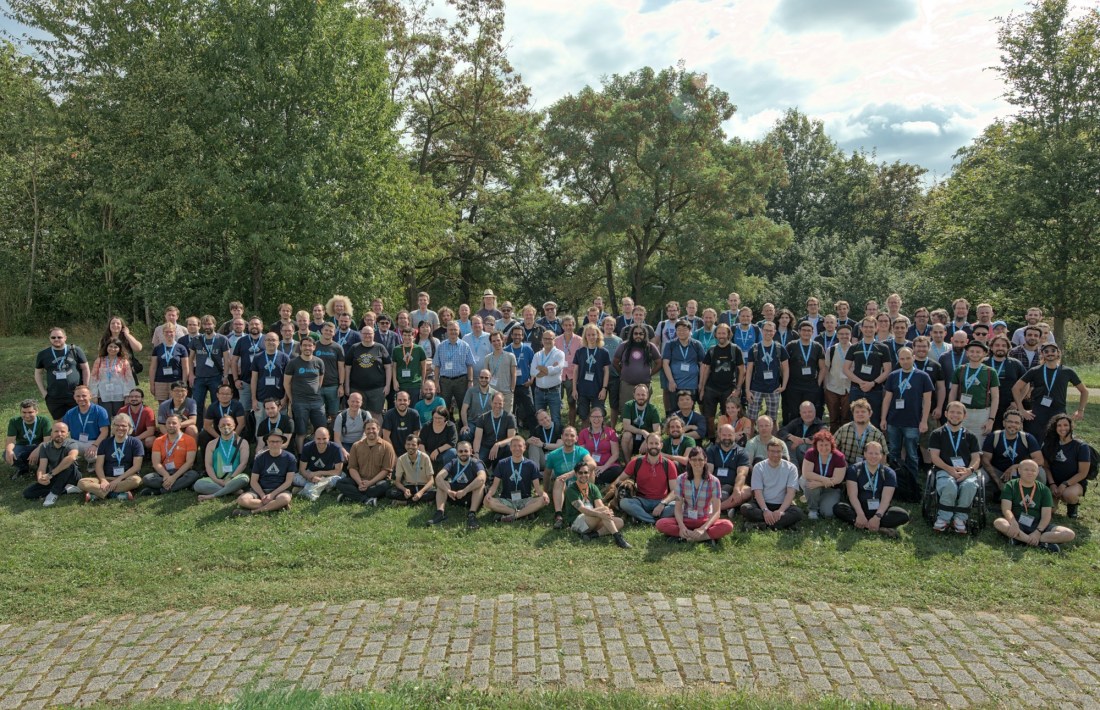
Photo by Kevin Krammer

In addition, I got in a lot of hacking time between discussion sessions, which felt useful. Being able to sit down with other people unblocked some work, both mine and theirs, as a result of some productive face-to-face conversations! And I got to see a lot of old friends again, and meet a few in person for the first time. The city of Graz was lovely too โ€” such a sensible and humane-feeling place.

Thank you to TU Graz for hosting us for this sprint, to Techpaladin Software for sponsoring my travel and lodging costs, and to Harald Sitter for organizing everything!

Akademy 2024: broadening, professionalizing, and being awesome

Akademy 2024 is a wrap, and others have already begun to write about the conference in beautiful Wรผrzburg, Germany, with some posts already visible on https://planet.kde.org. This year’s Akademy was fantastic, probably the best one I’ve ever attended. Other than the A/V situation (which we’ll be addressing next year, pinkie-promise), it was well-organized and smoothly run.

But more substantively, the talks and sessions were incredible, and really wove together a coherent narrative: KDE has mature and effective leaders who are pushing forward strategic projects that combine to become more than the sum of their parts. Among them:

Design

Andy Betts introduced us to the concept of the design system and how he and other VDG designers are building one to help unify layout and style across KDE software. โ€ฆthen Arjen Hiemstra introduced us to Union, a new styling system intended to be a single tool to style everything, and it can be informed by the design system’s semantics as well.

Apps

Nicolas Fella explained how our app development platform is lacking, inhibiting the growth of a more vibrant KDE-centric app ecosystem. This is also the topic of one of KDE’s newest high-level goals (full disclosure: I’m a co-champion of this goal along with Nicolas as primary champion). Carl Schwan laid out his “App Initiative” which is directly related, and David Edmundson talked about how we can improve the ability of our software to work in sandboxed environments.

Distribution

Harald Sitter introduced us to “KDE Linux” (tentative name), a new technologically advanced OS that will offer a radically high level of stability, security, and polish for those wishing to get KDE software directly from the source. David Edmundson’s talk about sandboxing is also heavily related here as well.

Recruitment

But how are we going to do all of this? Paul Brown, Aniqa Khokhar, and Johnny Jazeix introduced us to the “KDE Needs You ๐Ÿซต” goal, aiming to reach more people to broaden the pool of potential contributors so KDE is sustainable for years to come.

Eco

And finally, some perspective on a different sustainability issue: this was the hottest year on record, breaking records set just a few years prior. Our planet’s capacity to sustain human life in certain regions is starting to be impacted, and we need to consider both how our work exacerbates it, and how we can do our part to help make it better. Accordingly, we heard from Joanna Murzyn, Cornelius Schumacher, and Joseph P. De Veaugh-Geiss about KDE’s efforts to prolong the lifespan of old hardware so it doesn’t become e-waste. And Nicole Teale gave us some concrete hope by informing us about a program to introduce German schoolkids to the idea of upcycling old computers by installing Kubuntu on them, very similar to a similar program here in the USA that I was tangentially involved with!

Hopefully the themes and synergies here are clear. KDE is becoming more professional, more comprehensive in scope, will take more initiative for the distribution of its own software, will evolve that software’s design in a way that’s supported by modern design tools and professional designers, and contributes to solving the world’s biggest problems. I find this to be super exciting, and I hope you do too!


My personal role in Akademy was a bit more behind-the-scenes this year. I did take part in two presentations: the former goal wrap-up and the KDE e.V. Board of Directors report.

In these, I described the successes and challenges of my now-concluded Automation & Systematization goal, and helped to inform the community about KDE e.V.’s activities since last Akademy.

I also participated in Many birds-of-a-feather (BoF) sessions about various topics, including:

  • A tech discussion about KDE Linux โ€” install it today and help make it great!
  • Plasma planning and roadmap โ€” Plasma is in a great state, and we’re going to resume Monday meetings, this time in video form. I’ve got five specific features, UI changes, or bug-fixes I want to add to 6.3, and others have even more ideas.
  • Design team decision-making process โ€” super useful; we came up with one to enable us to make important decisions again.

Beyond the BoFs, I found myself constantly talking to people between sessions, during lunch, and in what seemed like every spare moment! Including:

  • Bjรถrn Balazs about his work to create https://privact.org, a foundation building a next-generation method to gather metrics from users with zero risk to their privacy.
  • Jos van den Oever about KDE developers applying for sponsorship from https://nlnet.nl to work on important KDE and KDE-relevent projects. Seriously, go do it!
  • Eike Hein about KDE’s history and the 100% drama-free Trinity Desktop Environment.
  • Neal Gompa about the challenges involved in shipping an immutable-base-system OS outside of single-purpose appliances (i.e. as a desktop OS for regular people, enthusiasts, and developers).
  • Xaver Hugl live-debugged an issue on my laptop that he was able to speedily conclude was a Libinput bug.
  • โ€ฆand many more I didn’t have the remaining brain capacity to remember!

All of this was completely exhausting, and I had to excuse myself from a few group events and dinners to rest and process the day’s events. But Wรผrzburg being a ridiculously beautiful city certainly helped!

This has been my favorite Akademy so far, and thank you so much to everyone who helped to make it possible โ€” David Redondo, Kieryn Darkwater, Victoria Fierce, Lydia Pintscher, and the rest of the Akademy team! Job’s a good ‘un, and I’ll see you around the internet!

Akademy 2023

As you may have seen from other posts on https://planet.kde.org, KDE’s annual Akademy conference is over and people are starting to blog about their thoughts on it!

This is my fifth Akademy, and my third one attending in person. As always, it was great to meet up with colleagues and old friends in real life! A kind of magic happens when a bunch of technically adept people with strong social relationships gather together in a room. There was a lot of it on display this year, even despite the punishing heat and spotty Wi-Fi performance!

The talks this year were quite good (as always), and I hope that at least one of mine could be counted among them. I gave a talk about my KDE Goal, “Automation and Systematization“, and a short lighting talk about Welcome Center, in addition to helping to present the KDE e.V. Board report. I particularly enjoyed the lightning talk by Kai Uwe Broulik about his custom solar PV array monitoring system using System Monitor, which I would love to get running for my own system!

But my favorite part of Akademy is always what comes afterwards: the “Birds of a Feather” (or BoF) brainstorming sessions. My favorites were the ones on Tuesday organized by Joseph De Veaugh-Geiss on the subject of internal communication. These were very productive and resulted in multiple actionable tasks as well as an impromptu hacking session/sprint on Thursday to update old wiki pages, consolidate information, and use the default Wikimedia theme! Unfortunately I wasn’t able to attend, but this is a subject I’m really excited about as I think documentation and internal communications are critically important topics, so it was wonderful to see so many other people excited about it too. If you’d like to help, please update any stale information or whole pages you find at https://community.kde.org. If you find a stale page but don’t feel comfortable making any such changes yourself, just edit it and add the text {{Outdated}} to the top, and someone else will handle it.

Overall, it was a useful productive and great time! After so many trips to Europe over the past 6 months, I’m now looking forward to some nice, uninterrupted stretches of normalcy where I can sit down and do some much-needed hacking and KDE e.V. work that’s been piling up, and actually implement some of the ideas and changes that we’ve all been discussing!

Presentation at University of Macedonia: Making a Difference

Today I had the honor of delivering a virtual presentation with fellow KDE contributor Neofytos Kolokotronis at the University of Macedonia, the site of KDE’s 2023 Akademy conference. The subject was “Making a Difference: How to contribute and jump start your career in Free Software with the KDE Community”, making it especially relevant for those who have been looking to get started contributing to KDE and don’t yet know how. But even if you’re a seasoned KDE contributor, I bet you’ll learn a thing or two about KDE’s storied history or ambitious plans!

Check it out:

On hiring, and fundraising to make it more biggerer

This year at Akademy, I took the plunge and decided to run for a seat on the KDE e.V.’s board of directors.


What is the KDE e.V.? It’s the nonprofit organization that represents the KDE community in legal and financial matters. It has several paid employees who work on KDE stuff, most notably promotion & marketing, project management, and event planning. You can see more at https://ev.kde.org/corporate/staffcontractors.

By the way, in case you were wondering (as I did at one point), “e.V.” is short for “eingetragener Verein” which is German for “registered association”–basically a type of nonprofit entity.

For several years, I’ve believed and publicly suggested that the KDE e.V. needs to have more technical positions. We need to directly hire KDE community members so they don’t have to seek employment with a 3rd-party company, or even drift away from the community when they have less free time and age into positions of greater financial need. In fact the KDE e.V. has already been moving in this direction, but slowly, because the available budget is pretty small compared to the vastness of the KDE community and the scope of more ambitious hiring. You can get an idea by looking at the report of the Financial Working Group in the 2021 annual report.

So I ran on a platform of hugely increasing both fundraising and technical hiring. And I’m honored to report that I won the election and am now a member of the board!

i got board

To those of you who voted for me, thank you so much for your support. For those of you who didn’t, I hope I can represent you well anyway, and if you get ticked off with anything I’m doingโ€ฆ please tell me! I welcome feedback. This position is all about being a good representative, and that’s what I want to be.


So what does this mean?

It means that a majority of the KDE e.V. membership approves of these goals, so when it gets more money, the KDE e.V. has a mandate to do more hiring–especially for impactful technical positions. It means we will eventually be able to have the big names in KDE paid by KDE, so they can stay in KDE over the long haul! And it also means we need a lot more money to make this happen.

There are a lot of steps to this, including figuring out the legal technicalities of full-time hiring, and increasing the budget so we can make sure we’re always offering market wages. We’ll be investigating potential ways to boost fundraising: hiring a professional fundraising director; applying for a lot more grants; having more explicit fundraising campaigns; gamifying fundraising; sending out nudgey newsletters to people who have donated in the past; making it easier to donate on a recurring basis; and more.

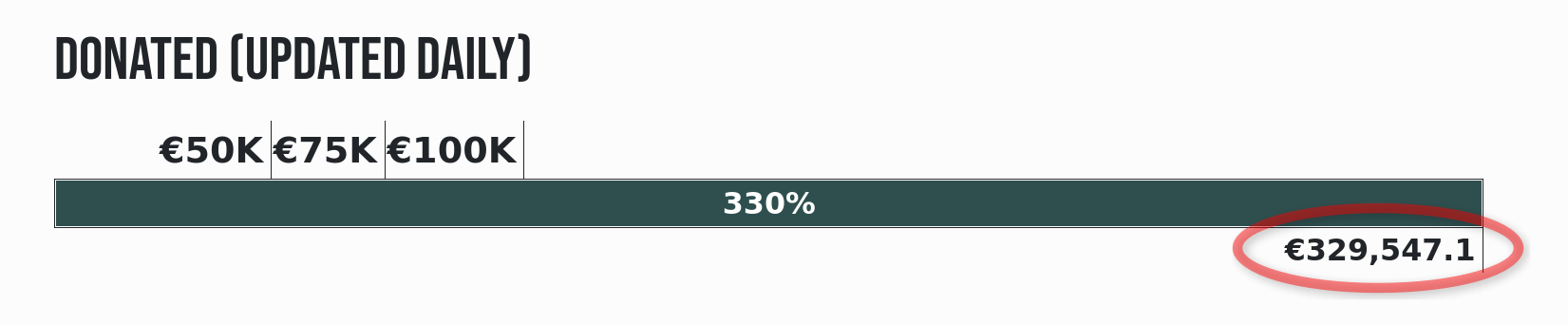
But for now, if you want to see us do more hiring, the best way is to make a donation to the KDE e.V. at https://kde.org/community/donations. It helps. It really does! This money is going to transform KDE into a professional powerhouse with its own internally-employed cadre of world-class superstars. We’re going to take on the Big Tech dogs and win, and we’re going to let our heavy-hitters make a living within KDE while doing it. But it can’t happen without your help, so please consider making a donation today!

25 ways you can contribute to KDE

In honor of KDE’s impending 25th birthday tomorrow, here are 25 ways you can get involved to help make KDE software the best in the world!

  1. Be kind. Most KDE people are either volunteers, or paid employees who work on KDE stuff far beyond their working hours. These folks put their heart and soul into KDE, and often the most impactful thing you can do is to express appreciation to someone you see going above and beyond the call of duty. Be positive, not negative. KDE is made by people with feelings, like you!
  2. Submit code to fix bugs, implement new features, or improve the accessibility of KDE software!
  3. File a bug report for every problem you encounter! You might be surprised by how many people don’t do this, and assume that KDE’s developers are already aware of your issue. We become aware through bug reports!
  4. Help translate KDE software into your native language!
  5. Volunteer to work on sysadmin stuff. KDE’s sysadmins are always terribly overworked and in need of assistance!
  6. Subtly advocate for FOSS in general and KDE software specifically to the people in your social circle who depend on you for technical advice and support. Don’t be pushy, but make it clear you’re willing to help them migrate once they get sick of Windows, macOS, software that’s riddled with ads or tied to a paid subscription, and proprietary file formats that lock you into one app. Admit it, you’re the nerd who your friends and and family rely on! Your words have power! Use it wisely. ๐Ÿ™‚
  7. Work on KDE’s formal promo efforts to get the word out about KDE software!
  8. Donate money to the KDE e.V. to support hiring more employees and paying for development sprints!
  9. Help maintain and expand KDE’s web presence!
  10. Design new icons to fill some of the gaps in the Breeze icon theme!
  11. Help work on the visual design of KDE software!
  12. Purchase FOSS hardware in general, and specifically, hardware with KDE Plasma preinstalled!
  13. Help a local school or small business install a Plasma distro on aging hardware so they don’t need to buy new stuff at high cost!
  14. Start contributing in your distro of choice to help them integrate KDE software better, ship a more appropriate set of default applications, update old themes which have drifted out of sync with what they were forked from, and so on!
  15. Triage bug reports to help developers focus on real issues!
  16. Answer KDE users’ user questions on social media and help people get the most out of KDE software!
  17. Review merge requests in projects you’re familiar with. This is an under-appreciated but very important way to contribute, even if you don’t consider yourself a technical expert. But you can test the changes to see if they work as described, and I bet you can also spot misspellings, obvious code errors, and weird user interfaces that could stand to be improved!
  18. Improve documentation–especially if you used the documentation and found something wanting. The best candidate to fix bad documentation is someone who just read it and found problems with it or didn’t find it as helpful as it would have been!
  19. Help manage stuff. KDE is desperately in need of “big picture people” capable of seeing things from a 10,000 foot view and helping strategically important work move towards completion!
  20. Be nice to other FOSS projects. We may be here for KDE, but GNOME is a good project too. There’s room for more than just one, and in fact healthy competition between projects is a good thing! Do don’t hate on GNOME if you’re a KDE person. They do a lot of things right and they produce quality software. Be a good ambassador!
  21. Start a local KDE user group. You might make some new friends and discover more local users of KDE software than you thought!
  22. Volunteer at your local school or university to teach students about programming or the importance of software freedom–with a KDE tilt, of course! ๐Ÿ˜‰
  23. Attend Akademy, KDE’s yearly conference. Eventually it will be an in-person event again, and let me tell you, it’s a lot of fun to spend several days around members of your digital tribe!
  24. Install Plasma on as many of your home devices as possible! Experience more freedom, as well as testing more esoteric use cases. This is valuable because there is only so much hardware the core developers can test again, we rely on our users to provide reports about problems with the full diversity of what’s available out there!
  25. Don’t sweat it if things aren’t perfect–like this list of 25 things that basically ends at 24. ๐Ÿ™‚

Our stuff is really pretty good

Today is my birthday, and I’ve reached the phase of life where I don’t need or want presents anymore–just a bit of time spent with some of the people who are important to me. And maybe some Chinese food. ๐Ÿ™‚

But today I got a nice present anyway: a glowing review of Plasma from Igor Ljubuncic of Dedoimedo. Go check it out! Igor is a tough reviewer, and always manages to find things to complain about whenever he reviews software, including ours. I’m very happy that he thinks our offerings are so far ahead of everyone else’s.

So let’s keep it that way! But who made this happen? YOU! You, my faithful readers! You, KDE developers and translators and promo people and other contributors! You, KDE distro packagers! You, bug reporters! You, users who spread the word and convert your friends and classmates and colleagues and spouses and parents. All of us are responsible for this success, because we care about the future of computing being high-quality and user-friendly. So happy birthday to everyone! Let’s keep on making the world a better place.

On Stewardship

What’s going on with GameStop right now got me thinking about the relevance to what we do in KDE.

For those not closely following it, here’s what’s happening: a small army of individual investors has purchased as many shares of the GameStop company as possible, calling the bluff of several large hedge funds that bet against GameStop by selling borrowed shares, mistakenly borrowing more shares than actually exist. Oops. A lot of these individual investors used a popular trading app named Robinhood, which it turns out is controlled by one of the companies betting against GameStop. So yesterday, Robinhood prohibited buying more GameStop shares, only selling. This drove the price lower and allowed some of the hedge funds to get out at a lower price than they otherwise would have had to accept, and reduced the value of Robinhood’s own users’ GameStop shares.

The people using Robinhood–whose name seems pretty ironic in retrospect–believed they could trust its owners to be good stewards of their money and investment desires, but this turned out to be false: when the owners were caught between serving their users and serving themselves, they chose the latter.

It got me thinking about platform stewardship. When things are going well, it’s easy to be a good steward. The challenge arrives when your own interests, money, or feelings are imperiled by doing the right thing for the people counting on your wise maintainership of the platform. If you let your own desires get in the way, people will start to distrust you and leave your platform.

In KDE, we also have a platform that people depend on, and trust us to be good stewards of. By and large we don’t have the same potential financial conflicts of interest, but others are possible when it comes to our feelings and other personal interests: we might want see ourselves as kings of a little digital kingdom, or want the software to reflect our own preferences rather than those of our users, or whatever.

In the interest of remaining wise stewards of our platform, we must always resist these desires. Not only are they selfish, but they are ultimately short-sighted and would lead to us losing users and credibility. By and large I think KDE community members already do a great job of this! And that’s a good thing, because the bigger we grow, the more important we will become, and the more frequent these potential conflicts of interest will become. In the face of these challenges, we must retain our culture of stewardship, and I feel fairly confident that we will!

Full disclosure: I own a symbolic one share of GameStop. It was not purchased using Robinhood. ๐Ÿ™‚