

Welcome to another edition of “This month in KDE Linux”!
Infrastructure remained a major focus this month, with multiple outages and bugs in Arch’s package archive leading to Harald Sitter creating a local mirror for KDE Linux. This substantially increased build delivery reliability.
Harald also worked on improving the speed of delta updates. This is experimental and in-progress, so you have to opt in; See the bottom of https://community.kde.org/KDE_Linux/Delta#Status
Beyond that, a number of features are under development but did not quite complete yet, so expect to hear about them next month.
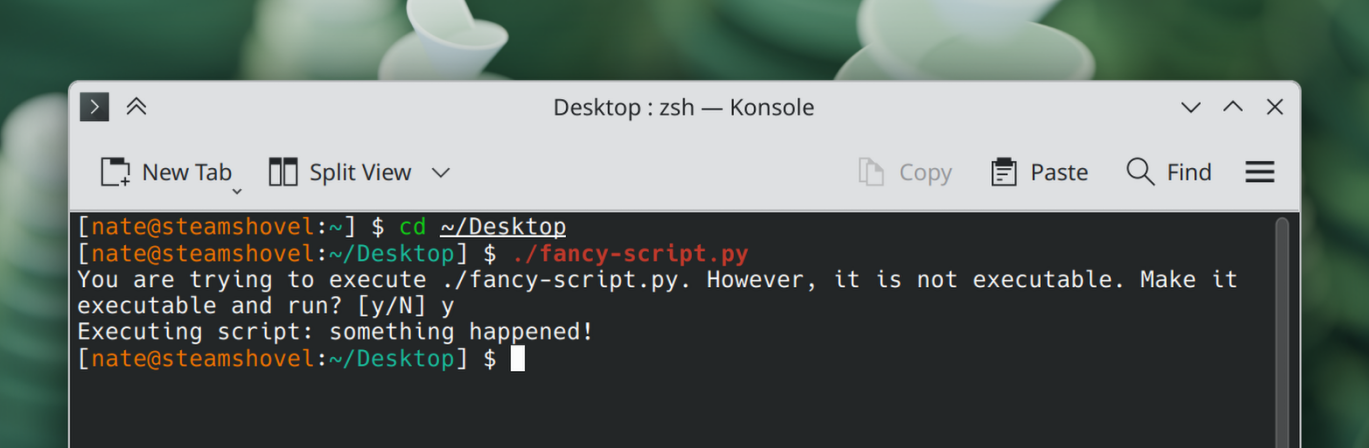
This month, Hadi introduced a terminal handler to prompt you to add execute permissions to scripts lacking it when you try to run them:
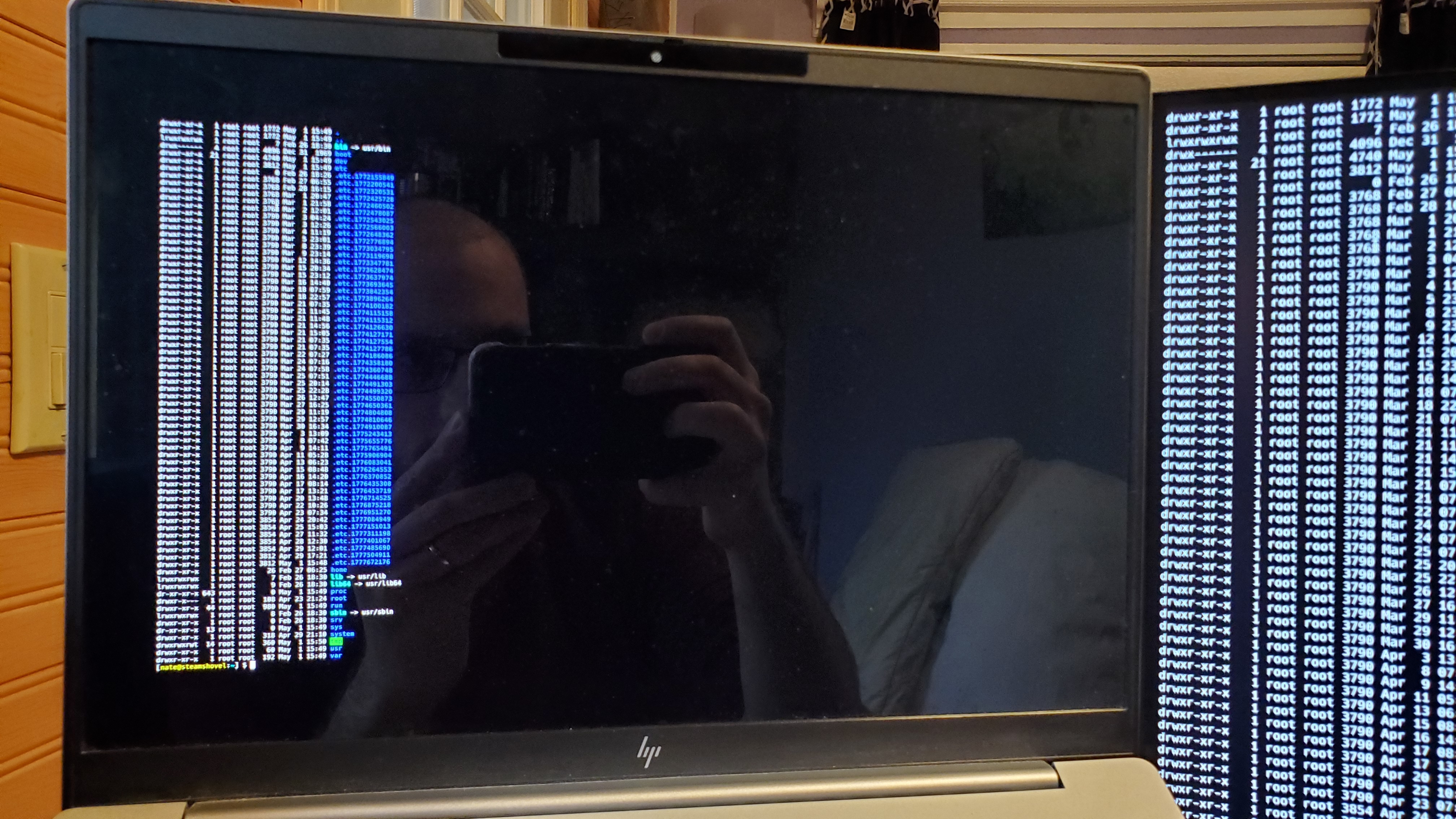
Hadi also moved our console handling to the newer userspace Kmscon software, which we’re using in place of the built-in console from the Linux kernel. Text looks way better now!
Thomas Duckworth implemented screen reader support for the installer.
Jonas Harer and Daniele Me made the default zsh config even better. It really is a joy to use now!
Aidan turned on IPv6 privacy addressing by default, improving privacy a bit when using IPv6 connections.
I made KDE’s ksshaskpass dialog be the thing that prompts you for the password to unlock your encrypted ssh keys, which also allows you to have it save them in the system’s password storage system if you’d like. I also simplified the process of setting up an ssh agent to automatically add your keys, and documented how to flip the final switch to turn it all on.
I also documented how to persistently change kernel parameters, in case you need some extra ones (for example, turning on the experimental Xe driver for your newer Intel GPU).
Finally, I flipped the switch to have KDE Linux use the new Union theming system by default for QML apps. If the results in non-Flatpak QML apps like Discover, System Settings, Info Center, and Emoji Picker look no different… that’s perfect!
That’s all for April, folks! I’ll see everyone for the May report, or ideally, sooner. Because, as you can see, while KDE Linux is being developed by multiple people (good for project health), the number of changes is a bit low (bad for project velocity). There’s plenty to do, so if you’re a fan of the project, please help out:
- If you’re an adventurous and technical person, install KDE Linux and report issues.
- If you’re good at writing, KDE Linux’s documentation can always use improvement. Submit merge requests here.
- KDE Linux leans heavily on Flatpak, so fixing packaging or code issues in Flatpak-packaged apps is very helpful.
- You can even help us build the OS itself! The Beta milestone is currently 73% complete, and there’s plenty to do.
- The Incus-based Kapsule system is integral to our “expansion by experts” story. If you’re a container expert or low-level OS nerd, working on the child tasks here is hugely impactful
And if you’re already using KDE Linux, let us know how your experience has been! Is it good? What can we do better?

