
…might be the one you already have.
I’m sure some of you are chucking over my realization of something so obvious! Yeah, fair enough. Perhaps this will at least burnish my KDE Eco credentials a bit.
Last October, the loud fan noise, poor multi-core CPU performance, and at best 4-hour battery life of my daily driver Lenovo ThinkPad X1 Yoga laptop were starting to become significant hindrances. It’s still a good laptop, but it just wasn’t good for me and my use cases anymore. It now belongs to my daughter.
I’ve gotten pickier over the years as I’ve discovered what I really want in a laptop, and looked for a cheap “good-enough” stop-gap that could be recycled to another family member after I located the perfect final replacement.
I found an amazing deal on a refurbished 2023 HP Pavilion Plus 14 and pulled the trigger! Here it is driving my workstation:

This basic little Pavilion is the best laptop I’ve ever used.
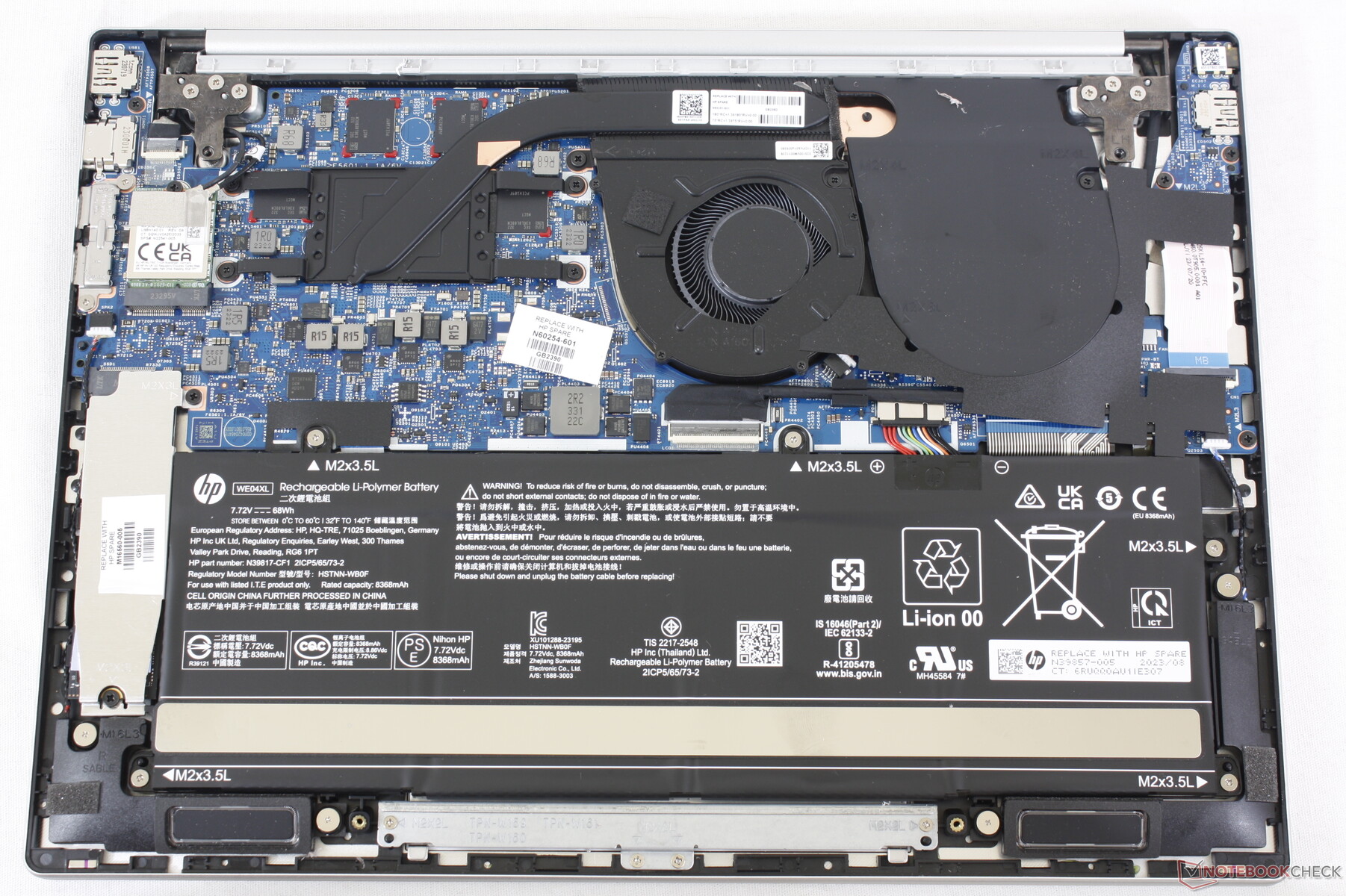
With a large 68 Watt-hour battery, its energy-efficient AMD 7840U CPU delivers a true 9-hour battery life with normal usage. For real! It also ramps up to do a clean build of KWin in less than 10 minutes! The laptop’s 2.8K 120Hz OLED screen is magnificent. Its keyboard and touchpad are truly the best I’ve ever used on a PC laptop. Linux compatibility is excellent too. Everything works out of the box. It’s just… great.
The problem is, it isn’t perfect. The speakers are awful, the aluminum casing is fairly thin and prone to denting while traveling, and there’s no touchscreen or fingerprint reader. USB 4 ports would also be nice, as would putting one on each side, rather than both on the right.
So I kept looking for the perfect replacement!
I still haven’t found one.
Everything out there sucks. Something important is always bad: usually the battery life, screen, or speakers. Often the keyboard layout is either bad, or just not to my liking. Other times the touchpad is laggy. Or it’s not physically rugged. Or there’s no headphone jack (what the heck). Or the palmrest is coated in some kind of gummy sticky material that will be disgusting with caked-on sweat and skin in a matter of weeks. Or Linux compatibility is poor. Or it’s absurdly expensive.
So for now, I’ll stick with the little Pavilion that could.
If only HP made this exact laptop with a thicker case and better speakers! A fingerprint reader and a touchscreen would be nice-to-haves as well. Replaceable RAM would easily be possible with a small redesign, as there’s empty space in the case. A USB 4 port on each side would be the cherry on top.
Ah well. Nothing’s perfect, and it’s good enough.
 Adventures in Linux and KDE
I think HP will refresh this laptop with a sturdier case and better speaker. But, PC OEMs being PC OEMs, I am sure HP will find a way to degrade another part of the laptop that’s good right now. This is what all of these companies do.
LikeLike
I’m sure that’s exactly what will happen!
LikeLike
I love my Framework, but it has its flaws too. It’s a bit similar to Linux: it’s not perfect but at least you can rest easy you can fix any problem by tweaking some things and you can always consult the amazing community.
LikeLike
Interesting, I have “HP EliteBook 865 16 inch G9”.
Two USB4 ports on the left a USB3.2 on each side, fingerprint reader which works well, 32GB of ram upgraded from 16GB. Don’t know about the speakers since i always use headphones.
As for downsides, screen sucks, not bright enough and awful screen retention problems.
Searching for a good laptop really sucks.
LikeLike
I can recommend a second hand 27″ iMac for home use. They have the best hardware money can buy and they are cheap!
As they are designed for hardcore graphical design, they have a 5K display!!! (really fantastic) and the best GPUs and CPUs. Not to mention their design…
2019 model you can get with $ 600-700 US and 2015 model with $ 200-300 US. As new they have costed $ 2000-3000 US.
Combine the iMac with active studio monitors (Pre Sonus Eris 3.5 for $100 or Genelec 2 for $ 1000) and you have a perfect setup.
You can also use a 2009-2014 iMac as a second monitor. Instructions in https://github.com/floe/smc_util/ and https://balharrie.uk/p/target-display-m
LikeLike
@Sami Saarinen, and we can simply install Linux that works smoothly on iMac?
LikeLike
… and you can use the second iMac as a backup harddrive with NFS…
LikeLike
It’s just about impossible to find an AMD dGPU in a laptop these days
LikeLike
oh.. *thumpsup*
LikeLike
Nice Desksetup ..
that’s mine..
Blackys Desksetup Picture
best
LikeLike
Did you consider to buy a refurbished HP Elitebook 845? Starting from gen 9 the screen returned to the 19:10 format giving more vertical space. I never ran Linux on one but these Elitebooks are very sturdy, good speakers (are you kidding, in a laptop?), sturdy cheap and repairable.
LikeLike
Unfortunately those all have FHD screens. Otherwise very compelling.
LikeLike
Buying a laptop is almost as bad as buying a modern smartphone. You always have to compromise. The compromises in the smartphone world are worse, but there are only a handful of viable models to choose from. You will 100% end up with a bad deal, but at least it’s fast.
Laptops give you the (false?) hope that the perfect model might hide itself behind page 9999 of whatever shopping website you use. Even if everything is perfect on paper – build quality, fan loudness, internal temperatures are never consistent with whatever online reviews report.
You might end up with an ok deal, but you will probably lose a lot of time along the way.
LikeLike
That is a great laptop. Two of the things that it has that are essential for me (I cannot stand laptops that do not have them) are:
Sadly (for me) these things are very rare other than on HP laptops (there are a few, very few, others).
LikeLike
Just gonna take a minute here and shill Framework laptops — they’re upgradable, repairable, and they have out-of-the-box compatibility with Linux! It’s a very cool company. I’ve had a blast with my Framework 13!
LikeLike
Does HP supports battery charging thresholds on linux? This is one thing that keeps me with lenovo.
LikeLike
On this laptop, it does not. I don’t know if it’s supported on Windows, though, so it might just be that HP didn’t implement firmware support for the feature at all.
LikeLike
I’ve got an asus vivobook 16 (x1605za-mb799w) and while it’s not perfect, its close to that i like in laptops. It’s light enough for its size, it’s upgradable (ram, battery, wifi, storage), cpu is faster than i thought, and runs linux surprisingly well (only thing that doesnt work is the fingerprint reader, not supported by fprint). In the future I wanna get a ROG Zephyrus G14, but that’ll come in the far future.
LikeLike
Have you ever thought about trying Asahi Linux on a MacBook Air or Pro with M1 or M2 chip (pro/max)?
I am daily driving Asahi Linux Arch Linux ARM (https://asahi-alarm.org/) since more than three years, using Plasma. The fan NEVER runs during normal development, only when all CPU are used compiling (but even then only after a few minutes). In the last 3 years I heard the fan maybe 10 times, and even then its so quiet you hardly realize they are running. I just compiled kwin – it took 4 minutes 50 seconds (but hand dozens of other application and hundrets of firefox tabs open).
The speakers are amazing, keyboard and screen of course too (its Apple).
The only thing that currently does not work is DCP alt mode, so you can not plug in a external screen via usb-c yet – but the devs have it working already, and I think they should ship that within the next couple of month. I also comes with fingerprint reader (touchId) but that one was not reverse engineered as well yet.
M3 and M4 support is hopefully coming also next year.
Best device I ever had, and once all hardware is supported I think there is nothing better you can get.
LikeLike
I’m sure it’s a great idea. It’s a bit of an emotional leap for me to return to any part of the Apple world, and I also have some hardware support concerns. But it may be a solution.
LikeLike
How do you deal with PWM on your OLED screen? It’s not listed in the spreadsheet but every OLED has PWM even when it’s bit higher than lenovo screens from trash.
LikeLike
I don’t notice it. Notebookcheck says the frequency is 504.7 Hz, which is apparently too high for me to notice. It’s also not something that’s un-noticeably and subconsciously fatiguing, either, since I’m looking at the screen for probably 10+ hours a day. I would have noticed that!
LikeLike