Does Wayland really break everything?

I’ve written some other posts on Wayland recently, and it’s time for another one! Feel free to skip it it you aren’t interested in a discussion of Wayland and platforms.


Many may be familiar with the now semi-famous “Wayland breaks everything!” document written by Probonopd–one of the core AppImage developers–panning Wayland because it isn’t a drop-in replacement for X11. And he’s in the news again for a new Github repo with the aspiration of creating protocols for functionality not currently available to Wayland-native apps that are intentionally missing in Wayland’s standardized protocols–which won’t work because lacking standardization means they won’t become a part of the platform that app developers can reliably target.

There’s a bit of chuckling and jeering over this in developer circles, but to regular people, the whole “Wayland breaks everything” charge might ring true, or at least seem like it contains a kernel of truth. Because from a certain perspective, he’s right: Wayland really does break everything that directly uses X11 functionality!

It’s just that this is the wrong perspective.

Look, if I said, “Linux breaks Photoshop; you should keep using Windows!” I know how you’d respond, right? You’d say “Wait a minute, the problem is that Photoshop doesn’t support Linux!” And you’d be right. It’s a subtle but important difference that puts the responsibility in the right place. Because there’s nothing Linux can do to ‘un-break’ Photoshop; Adobe needs to port their software, and they simply haven’t done so yet.

And it’s much the same with X11 and Wayland. Wayland wasn’t designed to be a drop-in replacement for X11 any more than Linux was designed to replace Windows. Expectations need to be adjusted to reflect the fact that some changes might be required when transitioning from one to the other.

Now, even though Wayland wasn’t designed to be a drop-in replacement for X11, it was certainly intended to eventually replace it. But this implies that it was intended from the start to do less than X11, and and that would be correct.

X11 was a bad platform

In ye olden days, X11 was a whole development platform. Your app that targeted X11 could use X11 to draw its UI with a built-in widget toolkit; print documents with an included print server; record the screen; set global keyboard shortcuts; and so on. This is all way before my time, but I get the sense that X11 was either originally envisioned to be a development platform for app developers, or else quickly morphed into one during its early days.

It didn’t work out. The built-in UI toolkit looked horrendous, even for the standards of the time. Apps that requested the same resources could stomp on one another and break each others’ functionality in ways that were impossible to fix short of uninstalling one of the apps. Features like printing withered because a window manager was really the wrong place to put that functionality and its later maintainers lacked the needed expertise or interest to maintain it. And so on.

UI toolkits like Qt and GTK quickly rose up to take over most of this sort of app platform middleware in a way that worked much better for users and was easier to target for app developers. We’re talking about the mid 90s here; it was a long time ago.

(Of course this is slightly unfair; lacking a print server isn’t what people complain about being missing from Wayland. It’s more like things like apps able to set custom window icons and move their own windows. These are the really hard cases; they aren’t present on Wayland because they were commonly abused by apps on X11 to cause unsolvable problems. It’s not an easy thing and there are trade-offs involved in bringing them to Wayland.)

Linux isn’t a platform

Anyway, the rise of UI toolkits necessarily fragmented the app landscape. Instead of developing for one target (X11), a FOSS app developer now developed for Qt, or GTK, or whatever, so we ended up with a lot of “KDE apps” and “GNOME apps.” Yes, these apps still probably worked elsewhere, but it was obvious what platform and toolkit they been developed to work best in. They might look and feel weird when run elsewhere, or certain features might not work well or at all.

And that’s where we remain today. Absolutely nobody writes an “X11 app”; their app may use functionality in X11 for something that there’s no better way to do, but the app will use Qt, GTK, KDE Frameworks, or whatever for 99.9% of its functionality.

It brings us to a potentially thorny topic: Linux isn’t really a platform either, any more than X11 succeeded at being one. Almost nobody writes a “Linux app”; making raw Linux kernel system calls is generally unnecessary because whatever UI toolkit you’re using wraps this functionality and abstracts it to all the different platforms that the toolkit supports. The toolkit ensures that it just happens to work on Linux too.

The real platform

So is all hope lost for cross-desktop interoperability? No. In fact prospects are better than they have been in a long time! Because today there is in fact an emerging platform; something that abstracts away even the app toolkits if you want to roll that way. I’m talking about Portals, PipeWire, and Wayland protocols.

Probonopd pans these as bolt-ons that you shouldn’t have to have running on your system, but I think this isn’t realistic. The model of the monolithic window server that offers all functionality failed decades ago. In its place, we have libraries and APIs that every FOSS developers can reasonably expect a modern system to be running.

The portal system offers a standardized way to present platform-native open or save dialogs, send notifications, open documents in other apps, print documents, take screenshots, record the screen, handle drag-and-drop, see if the user’s active theme is light or dark, and much more. The portal system uses PipeWire under the hood for a lot of this stuff, so you can expect that to be installed as well. And you can also expect most Wayland compositors–most notably the two most important ones KWin and Mutter–to support pretty much all publicly standardized Wayland protocols.

I think this is the platform: Portals-and-Wayland-and-PipeWire. Clearly we need to come up with a better name. 🙂 Maybe PW2. But if your app targets these, it will run on pretty much every modern Linux system. And the big two FOSS toolkits of Qt and GTK both have cutting-edge support for all of it. So use whatever UI toolkit you like.

Why now?

We’re hearing more about this recently because the transition is picking up steam. X11’s maintainers have announced an end to its maintenance. Plasma is going Wayland by default, following GNOME. Fedora is dropping X11 support entirely. We’re in the part of the transition where people who haven’t thought about it at all are starting to do so and realizing that 100% of the pieces needed for their specific use cases aren’t in place yet. This is good! Them being heard is how stuff happens. I wish it had happened sooner, but we are where we are, and there are a lot of recent proposals and work around things like remote control, color management, drawing tablet support, and window positioning. There will probably be an awkward period before all of these pieces are in place for all of the people. And for the those who really do suffer from showstopping omissions, I say keep using X11 until it’s resolved. No one’s stopping you (well, except for Fedora, so if this is you, don’t use Fedora. 🙂 The cutting edge should be fun! If it isn’t, try something else).

Wrapping up

In this context, “breaking everything” is another perhaps less accurate way of saying “not everything is fully ported yet”. This porting is necessary because Wayland is designed to target a future that doesn’t include 100% drop-in compatibility with everything we did in the past, because it turns out that a lot of those things don’t make sense anymore. For the ones that do, a compatibility layer (XWayland) is already provided, and anything needing deeper system integration generally has a path forward (Portals and Wayland protocols and PipeWire) or is being actively worked on. It’s all happening!
This week in KDE: Holiday bug fixes

Like last week, the focus remained on getting the mega-release ready for, well, a mega release! Along the way folks have been starting their well-earned vacations, so the pace of work understandably decreased a bit. Accordingly, this will be the last regular weekly post of the year, with at least next week’s skipped, and possibly the next two. Happy holidays, everyone! Rest and recharge so we can hit the ground running in 2024. 🙂

KDE 6 Mega-Release

(Includes all software to be released on the February 28th mega-release: Plasma 6, Frameworks 6, and apps from Gear 24.02)

General infoOpen issues: 216

UI improvements

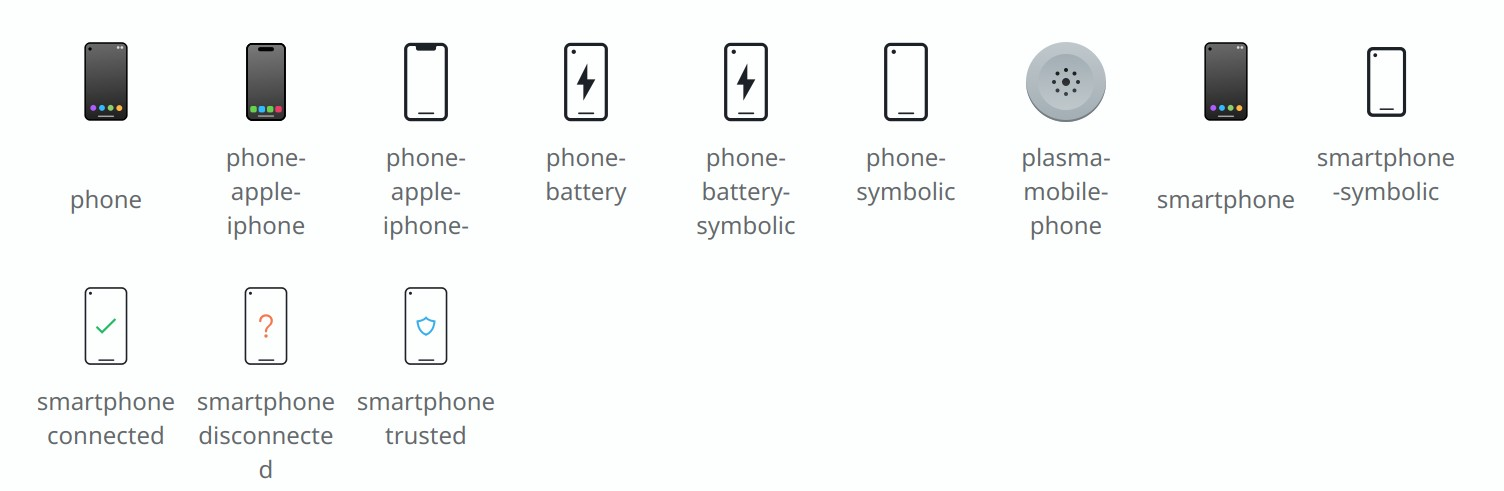
The Breeze icon theme’s smartphone icons have been overhauled and modernized to reflect what phones actually look like today (Áron Kovács, link):

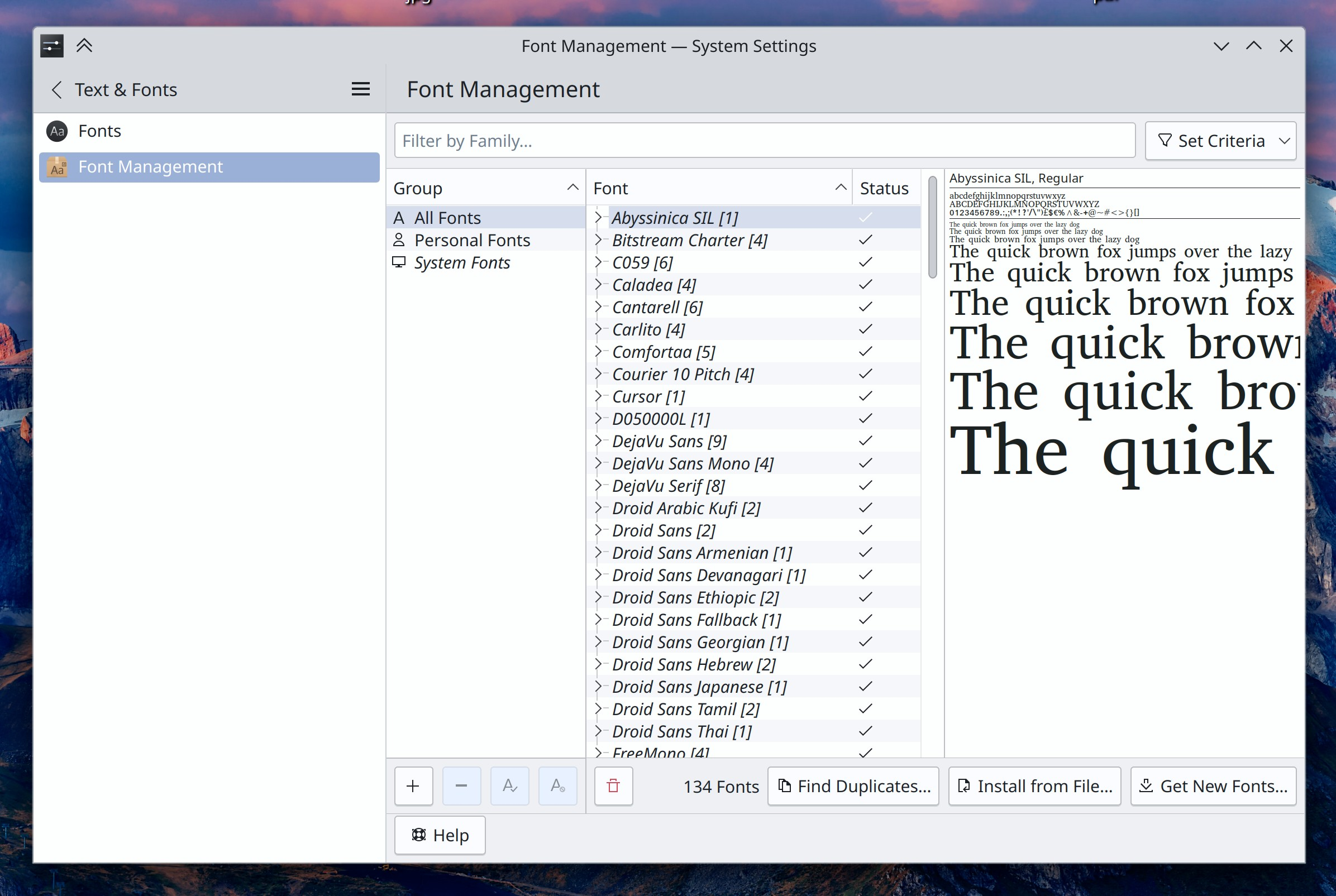
System Settings’ Font Management page has gotten a visual modernization to be more in line with the new frameless style in Plasma 6 (Carl Schwan, link):

Windows that don’t show up in the Task Manager or the Alt+Tab Task Switcher no longer appear semi-invisibly in the Overview effect (Akseli Lahtinen, link)

Breeze-themed non-editable frameless tabs (e.g. the tabs of a tabbed tool view or settings page) now expand to fill the available space by default, as there’s really no reason not to (Carl Schwan, link)

Improved the text contrast for certain accent colors (Akseli Lahtinen, link)

After pasting a file into a Dolphin window, if the file would end up at a location that’s currently out of view, the view scrolls to it so you can see it (Méven Car, link)

Okular’s “Show Signatures Panel” button now also opens the sidebar containing the signatures panel, if it happened to be closed at the time (Albert Astals Cid, link)

Elisa now supports cover images in the Webp format (Jack Hill, link)

Bug fixes

Important note: I don’t mention fixes for bugs that were never released to users; it’s just too much for me (it would probably be too much for you to read as well), and most people never encountered them in the first place. Because we’re in the middle of a big Plasma dev cycle, there are a lot of these bugs! So big thanks to everyone who’s made it a priority to fix them!

The screen locker has a fallback theme that appears when your active lock screen theme is broken. However when the fallback theme itself is broken for some reason, now the screen locker process breaks with the dreaded “your lock screen is broken” message rather than failing to lock the screen at all, which is worse (Joshua Goins, link)

File dialogs from a variety of Qt-yet-non-KDE apps will now have their name filters set correctly (Nicolas Fella, link)

When using a fractional scale factor, the Breeze window decoration theme’s window outlines no longer exhibit minor visual glitches (Vlad Zahorodnii, link)

Fixed an issue that could result in cursors leaving trails behind them when using a fractional scale factor and certain graphics cards that don’t support hardware cursors (Vlad Zahorodnii, link)

Widgets that have been assigned keyboard shortcuts should now be more reliable about remembering them. This probably alleviates or fixes a lot of the “Can’t activate Kickoff with the meta key” bugs! (Akseli Lahtinen, link)

Memory usage for NVIDIA GPUs is now represented with the correct unit in various System Monitor widgets and the app of the same name (Arjen Hiemstra, link)

When using a Bluetooth headset with integrated volume buttons, pushing them now always shows the volume change OSD (Bharadwaj Raju, link)

System Settings’ Task Switcher page no longer confusingly uses the word “backtab”, and the backwards-looking task switching invoked using Alt+Shift+Tab now works continuously if you hold it down (Yifan Zhu, link 1 and link 2)

The scrollbars of scrollable menus in QtQuick-based apps no longer inappropriately overlap the menu items (Tomislav Pap, link)

Other bug information of note:

Performance & Technical

Okular has now been ported to Qt 6 (Nicolas Fella, Sune Vuorela, and Carl Schwan. link)

The Wacom Tablet applet has now been ported to Qt 6 (Nicolas Fella, link)

Fixed one source of hangs in Dolphin when browsing a slow Samba share–this time having to do with bottlenecks generating thumbnails (Harald Sitter, link)

Reduced the memory usage of screen recording using KPipeWire. This won’t entirely fix the issue of screen recording taking up too much memory, but it makes a big difference already and should prevent outright resource exhaustion (Arjen Hiemstra, link 1 and link 2)

The DrKonqi crash reporter is now capable of recording and reporting crashes of the Powerdevil power management subsystem (Harald Sitter, link)

Automation & Systematization

Added an autotest to make sure the Emoji Selector window works (Fushan Wen, link)

…And Everything Else

This blog only covers the tip of the iceberg! If you’re hungry for more, check out https://planet.kde.org, where you can find more news from other KDE contributors.

How You Can Help

We’re hosting our Plasma 6 fundraiser right now and need your help! Thanks to you we’re now at 98% of our goal of 500 new KDE e.V. supporting members! That’s right, 98%!!! I bet we can get over the 500 mark before Christmas, and a little birdie might have told me that if we do, there could be stretch goals. 🙂 So if you like the work we’re doing, spreading the wealth via this fundraiser is a great way to share the love. 🙂

If you’re a developer, work on Qt6/KF6/Plasma 6 issues! Which issues? These issues. Plasma 6 is very usable for daily driving now, but still in need of bug-fixing and polishing to get it into a releasable state by February.

Otherwise, visit https://community.kde.org/Get_Involved to discover other ways to be part of a project that really matters. Each contributor makes a huge difference in KDE; you are not a number or a cog in a machine! You don’t have to already be a programmer, either. I wasn’t when I got started. Try it, you’ll like it! We don’t bite!

This week in KDE: un-flashy important stability work

Everyone kept hammering on the bugs this week. As a result, the number of open Plasma 6 issues decreased, and so did the number of older high and very high priority Plasma issues! I’m feeling really good about this release. Daily driving it is already a pleasure. I think it might be a winner. 🙂

KDE 6 Mega-Release

(Includes all software to be released on the February 28th mega-release: Plasma 6, Frameworks 6, and apps from Gear 24.02)

General infoOpen issues: 199

UI improvements

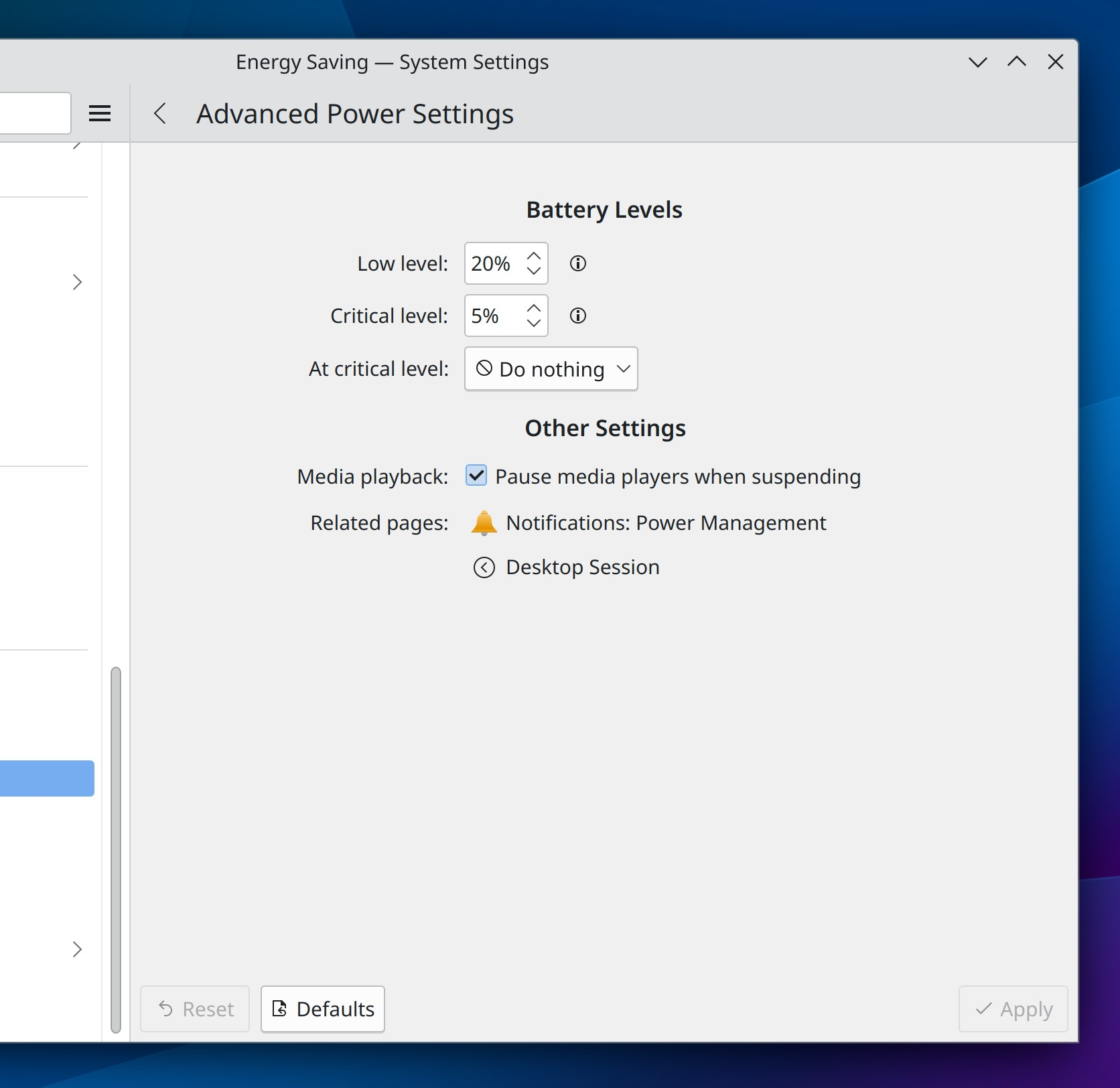
The “Advanced Power Settings” page in System settings has now been folded up into a sub-page of the “Energy Settings” page (Jakob Petsovits, link):

Made a variety of improvements to the way device batteries are shown on Info Center’s “Energy” page: more device types are now identified correctly, and their device models are now shown so you can more easily distinguish batteries from different devices of the same type (Shubham Arora, link 1, link 2, link 3, link 4)

When you try to connect to a Wi-Fi network but enter the wrong password, you’re now informed of this immediately instead of having to wait a while to learn why it didn’t connect successfully (David Redondo, link)

The Breeze-themed Telegram icon has been updated to better match Telegram’s own branding (Onur Ankut, link):

The Breeze cursor theme now includes more pre-generated sizes, making its cursors look better at various scale factors and in more apps and toolkits that don’t yet conform to the cursor-shape-v1 Wayland protocol (Jin Liu, link)

Ark’s integrated viewer window now remembers its window size the next time you open it (Ilya Pominov, link)

In Spectacle’s Rectangular Region mode, you can now hold down the Shift key to see the magnifier while moving the box using arrow keys (Noah Davis, link)

Bug fixes

Important note: I don’t mention fixes for bugs that were never released to users; it’s just too much for me (it would probably be too much for you to read as well), and most people never encountered them in the first place. Because we’re in the middle of a big Plasma dev cycle, there are a lot of these bugs! So big thanks to everyone who’s made it a priority to fix them!

KWin can no longer crash when told by an app to open window with an invalid size (Xaver Hugl, link)

Editing an app’s .desktop file in such a manner that the file’s Exec= value ends up containing an equals sign no longer causes the properties dialog to crash the next time you use it to edit the same file (Harald Sitter, link)

Fixed a common random Plasma crash (David Redondo, link)

You can no longer crash KMenuEdit by creating a new entry, immediately deleting it, and then clicking “Save” (Harald Sitter, link)

In the Plasma Wayland session, the power and session actions once again work after KWin has crashed (David Edmundson, link)

Fixed several visual glitches related to missing pixels when using multiple screens with any of them having a fractional scale factor (Yifan Zhu, link 1 and link 2)

When using Dolphin’s Details mode to view a folder tree, expanding a folder no longer orders the items incorrectly when the parent view was sorted by size (Akseli Lahtinen, link)

Changes to the cursor size now take effect in Plasma immediately, without needing to restart plasmashell (Vlad Zahorodnii and others, link)

Using the “Cut” command on files and folders in Dolphin once again causes them to become visually desaturated (Jin Liu, link)

GTK4 apps now use the current KWin-provided window closing animation, instead of just disappearing immediately (Vlad Zahorodnii, link)

When using Elisa in mobile mode, its playlist sidebar can once again be closed (Kevin Kofler, link)

The Plasma-themed spinbox UI element now works properly with a wider variety of 3rd-party styling–hopefully all of them! (Marco Martin, link)

Other bug information of note:

Performance & Technical

The Overview effect is now much faster to launch and has smoother animations; this work is now largely done and it represents a major improvement! (Vlad Zahorodnii, Marco Martin, and Arjen Hiemstra, link 1 and link 2)

…And Everything Else

This blog only covers the tip of the iceberg! If you’re hungry for more, check out https://planet.kde.org, where you can find more news from other KDE contributors.

How You Can Help

We’re hosting our Plasma 6 fundraiser right now and need your help! Thanks to you we’re now at 91% of our goal of 500 new KDE e.V. supporting members! That’s really close to 95%, which is close to 100%! So I think we might actually make it… if you like the work we’re doing, spreading the wealth is a great way to share the love. 🙂

If you’re a developer, work on Qt6/KF6/Plasma 6 issues! Which issues? These issues. Plasma 6 is very usable for daily driving now, but still in need of bug-fixing and polishing to get it into a releasable state by February.

Otherwise, visit https://community.kde.org/Get_Involved to discover other ways to be part of a project that really matters. Each contributor makes a huge difference in KDE; you are not a number or a cog in a machine! You don’t have to already be a programmer, either. I wasn’t when I got started. Try it, you’ll like it! We don’t bite!

This week in KDE: DMA fence deadlines and lots of bug-fixing

The bug-fixing marathon continued this week, alongside an avalanche of new bug reports! It appears people are indeed testing the Plasma 6 beta release, which is great! Fortunately most of the bugs being reported are minor. Keep it up, everyone! And don’t forget about the Plasma 6 fundraiser; we’re getting really close!

KDE 6 Mega-Release

(Includes all software to be released on the February 28th mega-release: Plasma 6, Frameworks 6, and apps from Gear 24.02)

General infoOpen issues: 205

New features

When using automatic bug reporting, the system notification telling you that a crash report has been automatically reported now also gives you the opportunity to send along a message to tell developers what you were doing or help them understand the context surrounding the crash (Harald Sitter, link)

Bug fixes

Important note: I don’t mention fixes for bugs that were never released to users; it’s just too much for me (it would probably be too much for you to read as well), and most people never saw those bugs in the first place. Because we’re in the middle of a big Plasma dev cycle, there are a lot of these bugs! So big thanks to everyone who’s made it a priority to fix them!

Fixed a case where Dolphin could crash when undoing a mass-rename job (Akseli Lahtinen, link)

Partition Manager no longer lets you set sector alignment to zero (Andrius Štikonas, link)

Switching your language to European Portuguese now works properly (Harald Sitter, link)

System Settings’ Recent Files page now supports non-default settings highlighting (Méven Car, link)

System Settings Energy Saving page now also supports non-default settings highlighting (Jakob Petsovits, link)

On System Settings’ Screen Edges page, the “Remain active when windows are fullscreen” checkbox now correctly highlights when in a non-default state (me: Nate Graham, link)

Scrolling on sliders throughout Plasma now scrolls in the expected direction when using inverted/”natural” scrolling (Ismael Asensio, link)

When taking a screenshot in Spectacle with the “automatically copy to clipboard” setting, the system notification that tells you about this can now be successfully be clicked to open the image in the default image viewer (Noah Davis, link)

The “Add More Timezones” Digital Clock widget popup is no longer sometimes too narrow to read the available timezones (me: Nate Graham, link)

Fixed several window positioning issues when using the “Minimize Overlapping” placement mode with a fractional scale factor in the Plasma Wayland Session (Yifan Zhu, link)

Other bug information of note:

Performance & Technical

Added support for “DMA-Fence deadlines”, which should improve performance and responsiveness on systems with Intel integrated GPUs in the Plasma Wayland session (Xaver Hugl, link)

Did a lot of performance work for the KWin Overview effect; it’s now much smoother, and work is ongoing to make it open faster, too (Vlad Zahorodnii and Marco Martin, link 1, link 2, link 3, link 4, link 5, link 6, link 7)

The Night Color transition no longer wrecks performance when using certain AMD GPUs (Xaver Hugl, link)

Ported the Accounts page in System Settings to work with Qt 6 (Nicolas Fella, link)

Automation & Systematization

Added a test to ensure that the animation speed setting works as expected (Fushan Wen, link)

Added a test to ensure that extracting the accent color from the wallpaper works as expected (Fushan Wen, link)

Added a test to ensure that the Media Controller widget’s time slider works as expected (Fushan Wen, link)

Added a GUI test to ensure that Info Center’s “About This System” page shows data properly (Alexander Wilms, link)

…And Everything Else

This blog only covers the tip of the iceberg! If you’re hungry for more, check out https://planet.kde.org, where you can find more news from other KDE contributors.

How You Can Help

We’re hosting our Plasma 6 fundraiser right now and need your help! Thanks to you we’re now at 88% of our goal of 500 new KDE e.V. supporting members! That’s really close to 90%, which is close to 95%, which is close to 100%! So I think we might actually make it… if you like the work we’re doing, spreading the wealth is a great way to share the love. 🙂

If you’re a developer, work on Qt6/KF6/Plasma 6 issues! Which issues? These issues. Plasma 6 is very usable for daily driving now, but still in need of bug-fixing and polishing to get it into a releasable state by February.

Otherwise, visit https://community.kde.org/Get_Involved to discover other ways to be part of a project that really matters. Each contributor makes a huge difference in KDE; you are not a number or a cog in a machine! You don’t have to already be a programmer, either. I wasn’t when I got started. Try it, you’ll like it! We don’t bite!

This week in KDE: changing the wallpaper from within System Settings

Plasma 6 beta 1 has been released! And so far the feedback has been very positive. A few final features snuck in before we started on the mega bugfixing marathon, which began this week! Please do continue to test the beta and report bugs. Other useful activities include fixing bugs and donating to the Plasma 6 fundraiser. 🙂

KDE 6 Mega-Release

(Includes all software to be released on the February 28th mega-release: Plasma 6, Frameworks 6, and apps from Gear 24.02)

General infoOpen issues: 164

New features

You can now set the wallpaper for any of your screens from a page in System Settings! (Méven Car, link):

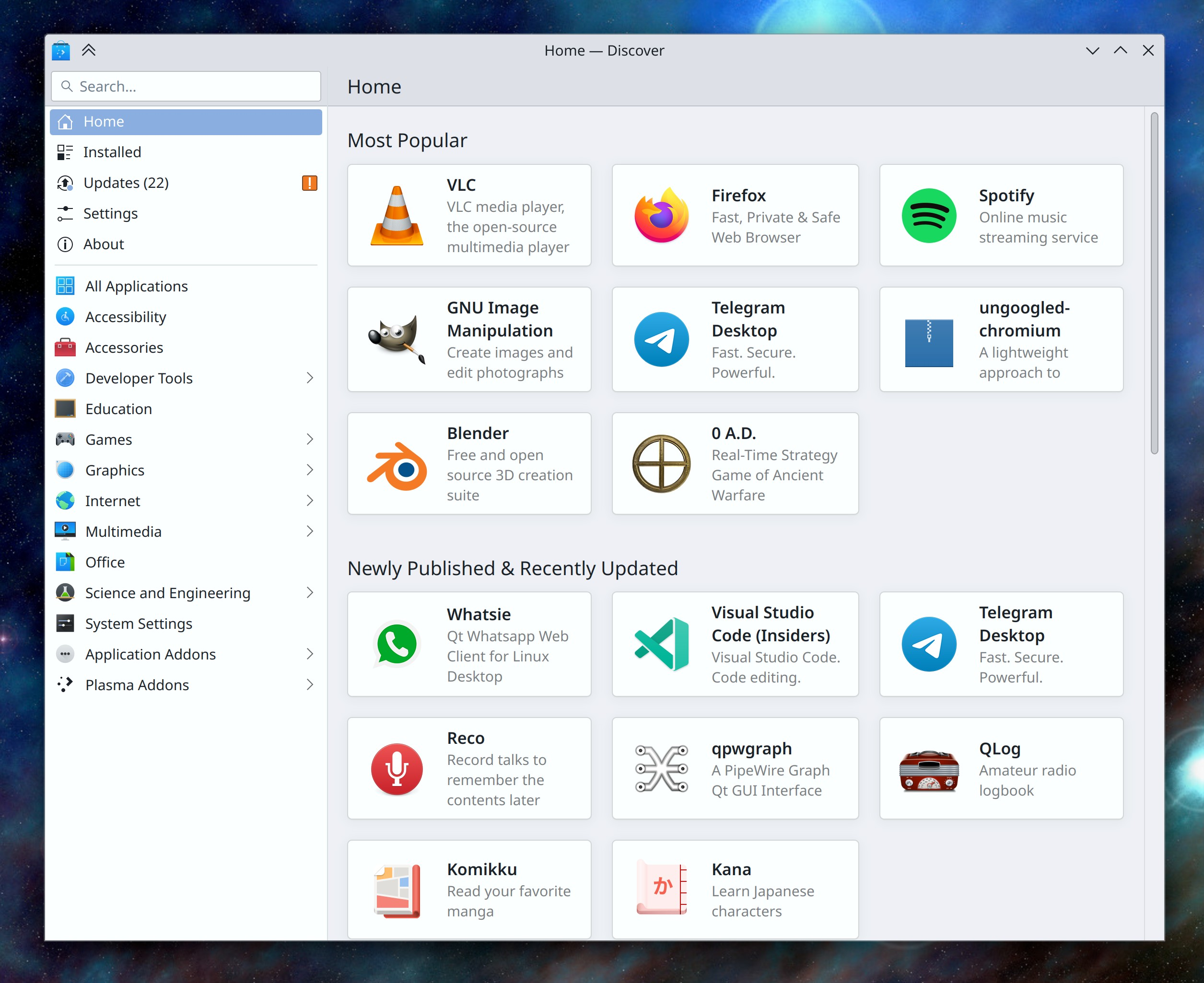
Discover now features a “Newly Published & Recently Updated” section on the main page when using Flatpak or Snap as your default apps backend, which makes the Linux app ecosystem feel more alive! Work is pending to also show this section when using distro packages for your default source, provided the distro actually ships relatively frequent updates to apps and not ancient years-old software all on the same date, which would make the section useless (Ivan Tkachenko, link):

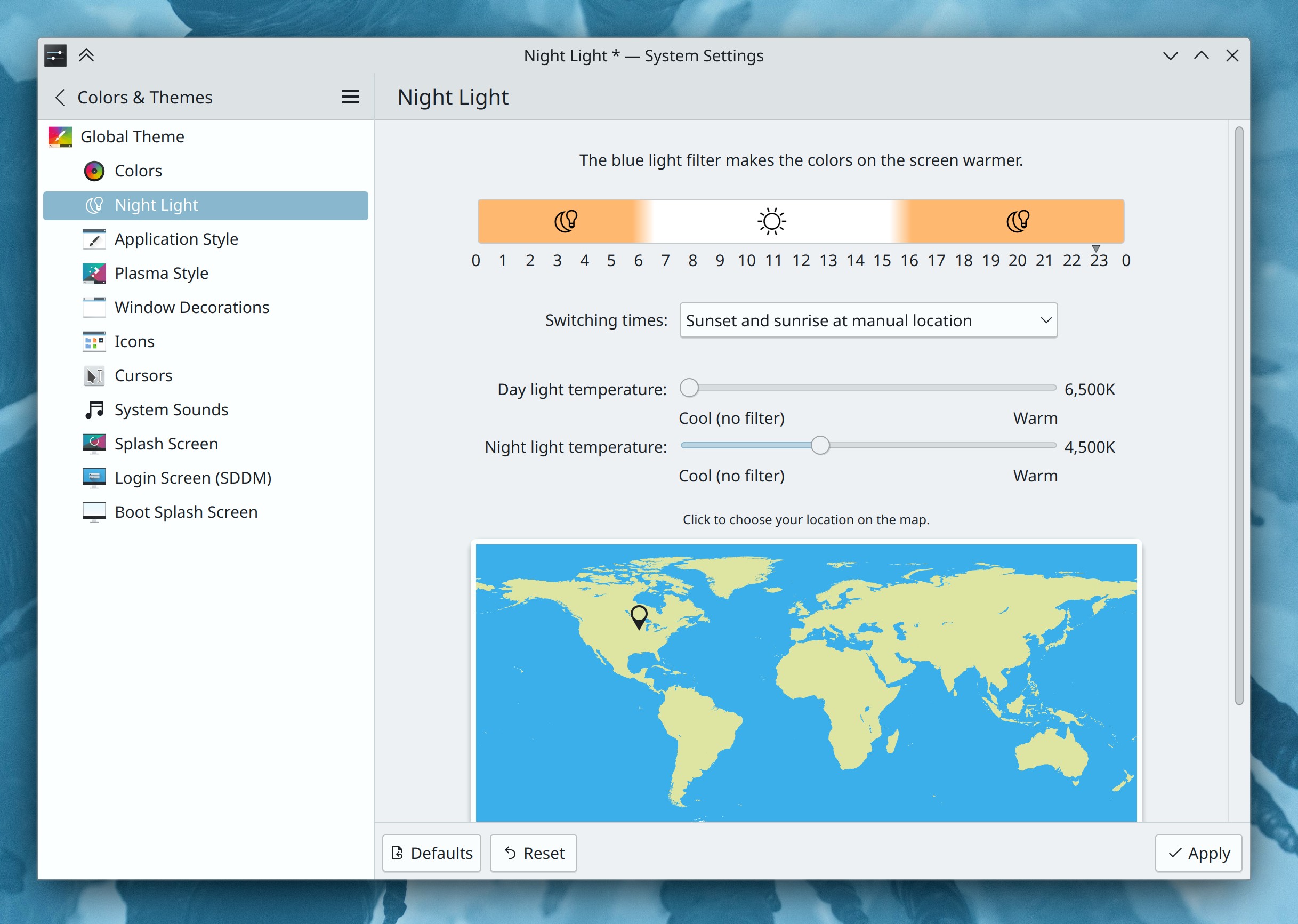
The Night Light page in System Settings now shows you a graphical representation of the active and inactive periods as well as the transition times (Ismael Asensio, link):

Implemented a “Shake to find your cursor” KWin effect, similar to the one in macOS. Note that it’s off by default for now, so you’ll need to manually turn it on in System Settings’ Desktop Effects page if you want to use it (Vlad Zahorodnii, link)

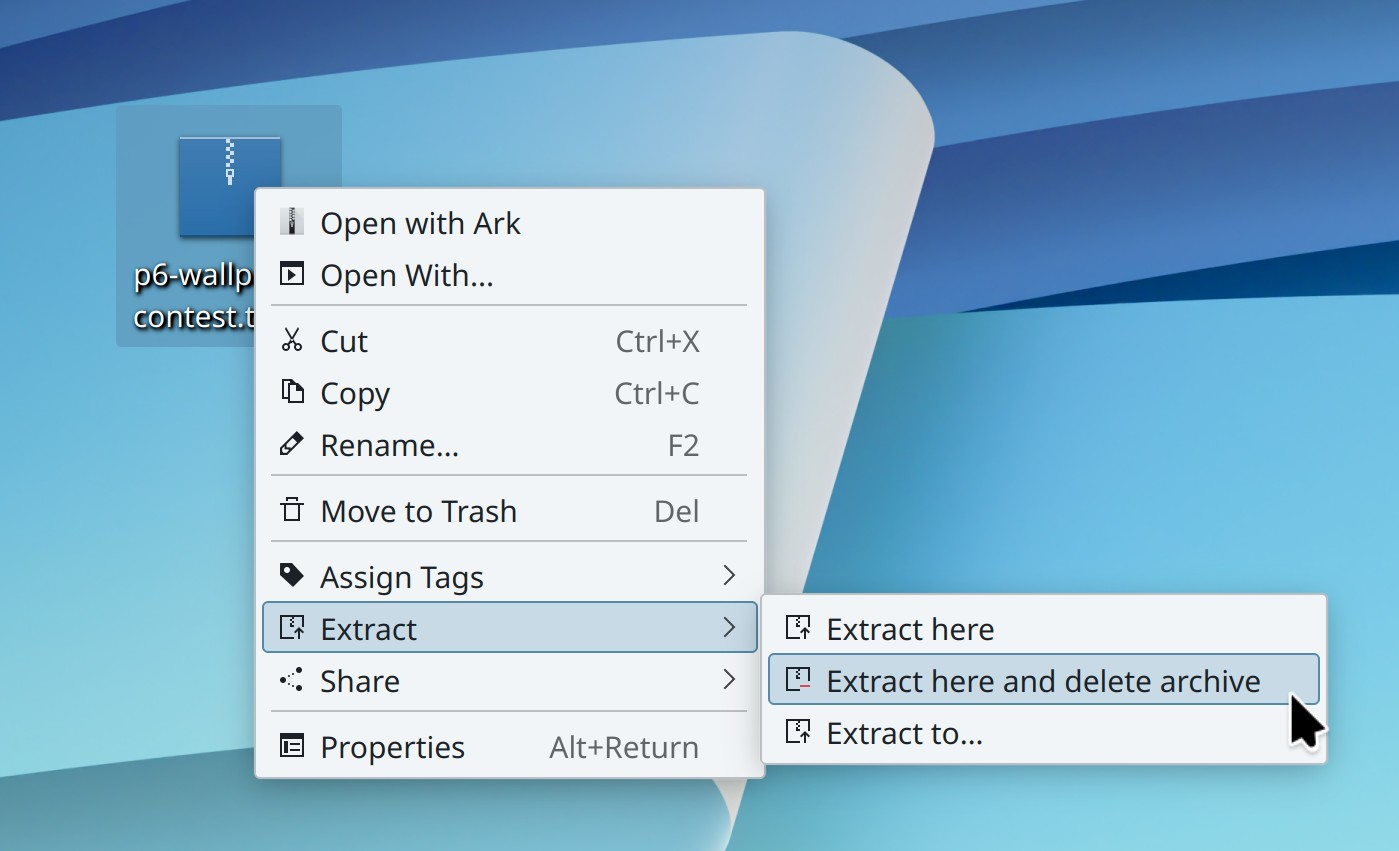
Ark now offers a new “Extract here and delete archive” option for its context menu plugin! As part of the process of making this possible, we decided to remove infrequently-used items in the menu in favor of keeping the “Extract here, autodetect subfolder” option, which was the most useful one and has now been renamed to “Extract here” for clarity (Severin von Wnuck, link):

User Interface improvements

Auto-Hide panels now respect the user-configurable delay setting that currently affects other screen edge effects, so you can configure whether they will un-hide immediately upon being touched, or wait an amount of time of your choosing (Bharadwaj Raju, link)

The glow effect that appears when your pointer gets close to a screen edge or corner that will do something when touched now respects the system’s accent color (Ivan Tkachenko, link)

The Morphing Popups effect now animates with the standard easing curve, which feels more consistent and nicer and also makes it feel faster (Timothy Bautista, link)

KRunner and other KRunner-based searches like the one in Overview now have proper visual click feedback when you click on a search result (Kai Uwe Broulik, link)

Tool views and sidebar tabs in Kate can now be dragged-and-dropped to other locations (Waqar Ahmed, link 1 and link 2)

Hitting the Escape key in Spectacle while in Rectangular Region mode now takes you back to the main window instead of quitting the app (Noah Davis, link)

Bug fixes

Fixed the most common crash in Dolphin which could happen when copying a large number of files to another location, closing Dolphin’s window, and then interacting with the overwrite/skip dialog (Akseli Lahtinen, link)

Fixed another common crash in Dolphin that could happen after entering edit mode and then changing the Application Style (Akseli Lahtinen, link)

In the Plasma Wayland session, sub-menus from Kicker no longer go underneath a bottom panel, and windows marked “Keep above other windows” no longer also go above panel popups (David Edmundson, link 1 and link 2)

Fixed various visual glitches with the bouncy app launch feedback effect on Wayland when using a scale factor higher than 100% (Vlad Zahorodnii, link 1, link 2, and link 3)

Window titles that contain a hyphen character no longer get mangled when displayed in Task Manager preview popups (Niccolò Venerandi, link)

Fixed OSDs on the lock screen looking pointlessly different from OSDs shown everywhere else (Bharadwaj Raju, link)

When you have multiple Battery widgets, the “Manually block sleep and screen locking” switch is now synced between all of them (Natalie Clarius, link)

Technical

Added support for hardware cursors on NVIDIA GPUs (Doğukan Korkmaztürk, link)

System Settings’ Firewall page has been fully ported to Qt6 (Guillaume Frognier and David Redondo, link)

KDE Connect’s Plasma widget has been fully ported to be compatible with Plasma 6 (Prajna Sariputra, link)

Automation & Systematization

Added an autotest to make sure that files and folders added to the desktop actually show up immediately (Fushan Wen, link)

Added an autotest to make sure that accent colors can be correctly extracted from wallpapers (Fushan Wen, link)

Added an autotest to make sure that Global Theme layouts can be correctly applied (Fushan Wen, link)

…And Everything Else

This blog only covers the tip of the iceberg! If you’re hungry for more, check out https://planet.kde.org, where you can find more news from other KDE contributors.

How You Can Help

We’re hosting our Plasma 6 fundraiser right now and need your help! Thanks to you we’re now at 83% of our goal of 500 new KDE e.V. supporting members now! I think we might actually make it! If you like the work we’re doing, spreading the wealth is a great way to share the love. 🙂

If you’re a developer, work on Qt6/KF6/Plasma 6 issues! Which issues? These issues. Plasma 6 is very usable for daily driving now, but still in need of bug-fixing and polishing to get it into a releasable state by February.

Otherwise, visit https://community.kde.org/Get_Involved to discover other ways to be part of a project that really matters. Each contributor makes a huge difference in KDE; you are not a number or a cog in a machine! You don’t have to already be a programmer, either. I wasn’t when I got started. Try it, you’ll like it! We don’t bite!